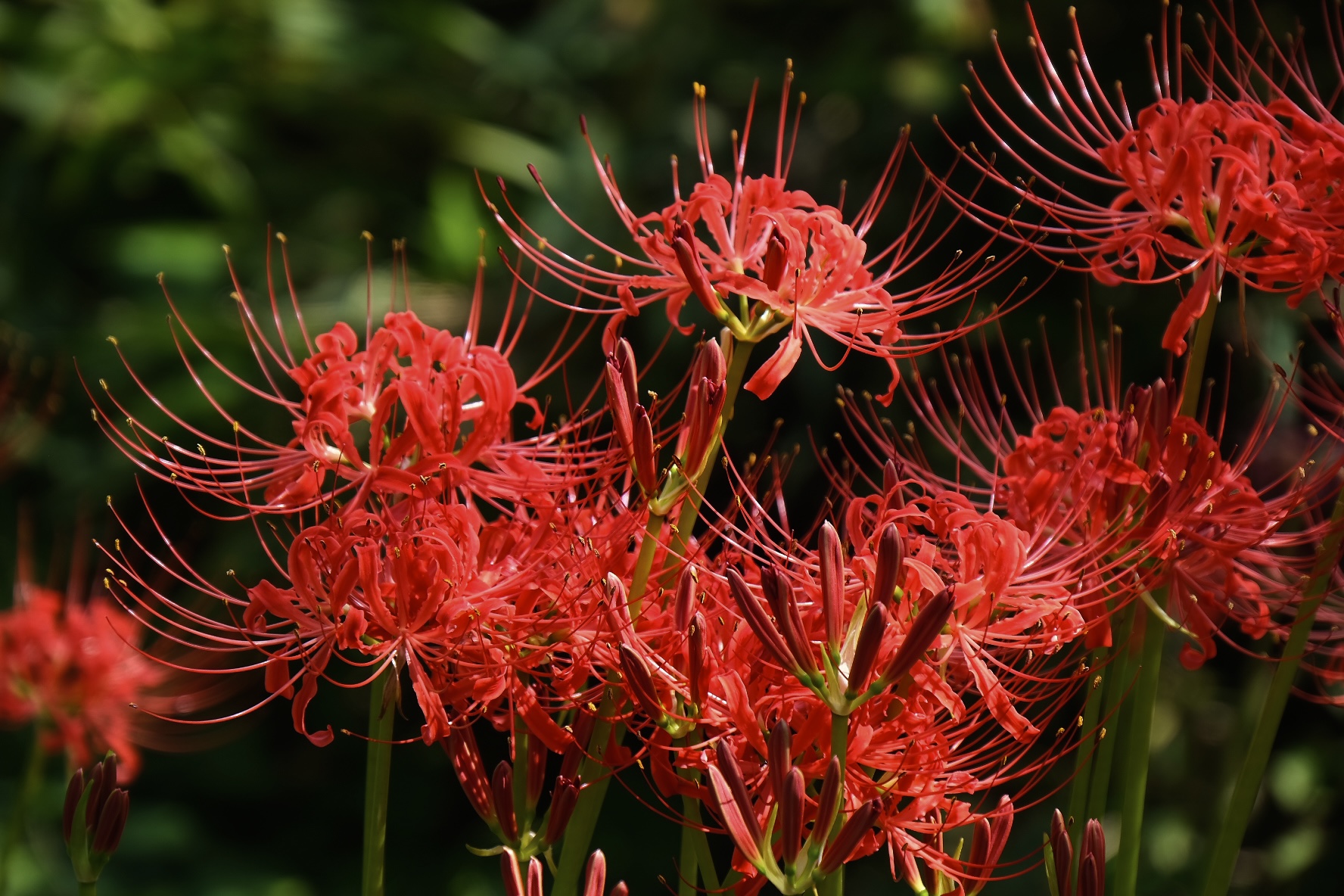
Red spider lily (Lycoris radiata) is more than an autumn ornamental. One of the Amaryllidaceae alkaloids associated with this plant group, galantamine, is an established prescription drug used for symptomatic treatment of mild to moderate dementia of the Alzheimer’s type. It is a cholinesterase inhibitor, not a cure for Alzheimer’s disease.
The plant-science story has changed substantially since the early transcriptome studies. In 2026, a chromosome-level genome of L. radiata enabled researchers to identify key downstream enzymes, clarify reversible steps in the pathway, and reconstruct galantamine biosynthesis in the yeast Yarrowia lipolytica. A separate multi-omics study in Lycoris longituba identified developmental stages with high galantamine accumulation and characterized additional NMT, AKR and CYP96T-related enzymes.
From candidate genes to a pathway
Earlier work mainly used transcriptomics and metabolite profiling to find genes whose expression correlated with alkaloid accumulation. That was useful, but it left important downstream reactions unresolved. The 2026 L. radiata genome study moved the field closer to a pathway-level explanation by combining genomics, metabolomics and biochemical validation.
This matters because natural extraction has practical constraints: plant biomass, variable alkaloid content, cultivation time and purification cost. A defined pathway opens the door to metabolic engineering in plants, cultured cells or microbial hosts.
Pathway discovery is not the same as industrial production
Reconstructing a pathway in a microbial host is an important proof of principle, but it does not mean low-cost commercial production is already solved. Enzyme activity, pathway flux, toxicity to the host cell, precursor supply and downstream purification still have to be optimized.
Do not treat red spider lily as a medicine
Lycoris plants contain multiple bioactive alkaloids and the plant itself is toxic. The presence of galantamine in this lineage does not make homemade extracts safe or medically useful. Pharmaceutical galantamine and the raw plant must be treated as completely different things.
The real scientific value of red spider lily is that it provides a natural biochemical system for asking how plants assemble structurally complex alkaloids. In 2026, that molecular blueprint became far more concrete.
For related context, see How Different Are the Phytochemicals of 20 Salvia Species? Chemometrics as a Screening Tool, Not a Treatment Guide.
For related context, see Chia Seed Research in 2026: Mucilage, ALA, Crop Science—and the Limits of Health Claims.
For related context, see Biostimulants Are Not Limited to Natural Products — Could Plant Agriculture Move Toward Targeted 'Drug Discovery'?.
References
- A chromosome-level genome assembly of Lycoris radiata reveals the evolutionary origin of Amaryllidaceae alkaloids and elucidates the complete galanthamine biosynthetic pathway. 2026. https://doi.org/10.1016/j.xplc.2026.101942
- Deciphering the galantamine biosynthetic pathway in Lycoris species lays the foundation for plant chassis-based production. 2026. https://doi.org/10.1016/j.plaphy.2026.111252
- DailyMed, Galantamine prescribing information, 2026. https://dailymed.nlm.nih.gov/
Comments