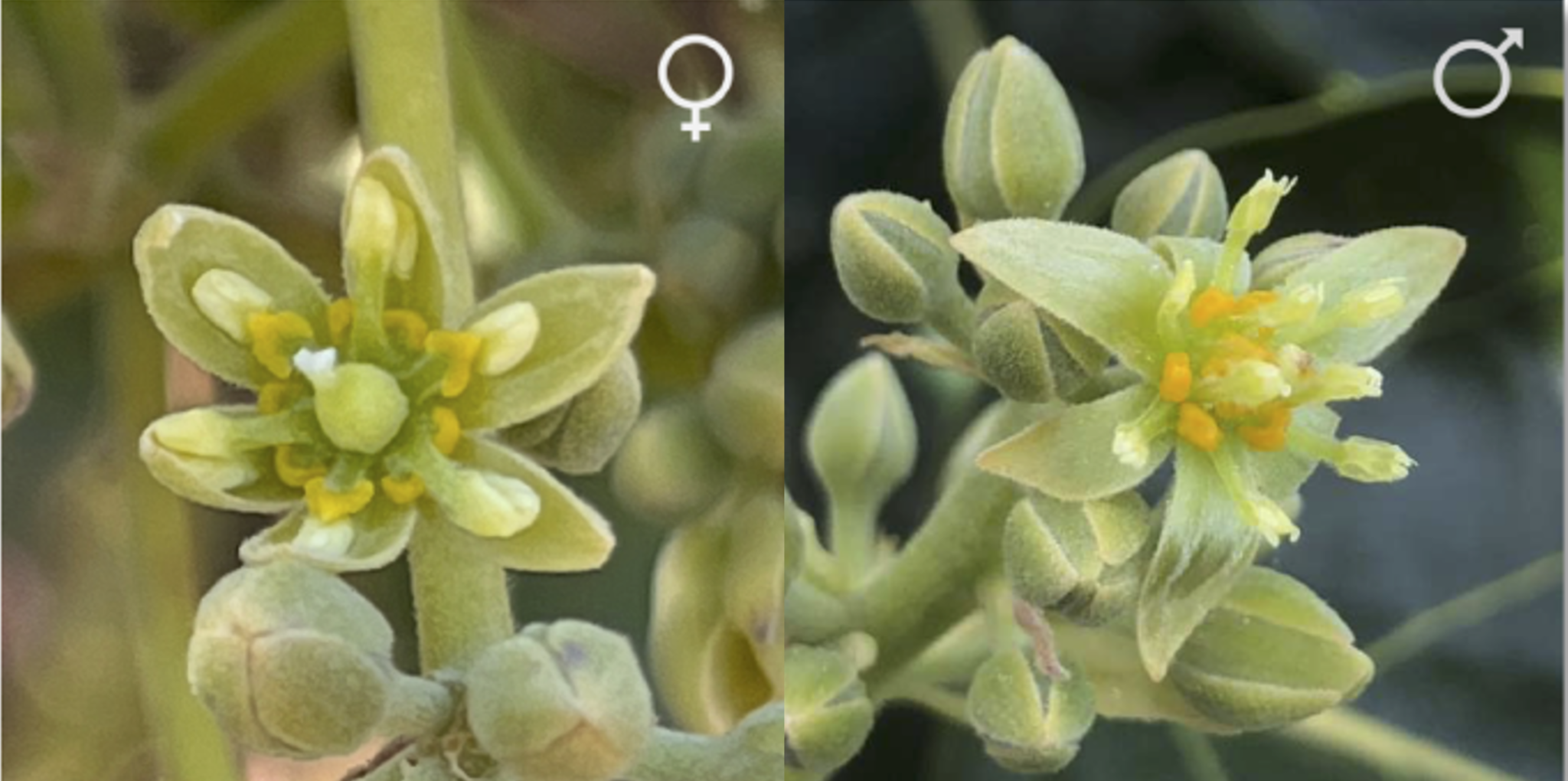
Avocado flowers are bisexual, but female and male function occur at different times. A-types and B-types show complementary schedules. A PNAS study published online on 28 July 2026 and in the 4 August issue mapped this heterodichogamy to SDMYB, an R2R3-MYB transcription-factor locus on chromosome 10.
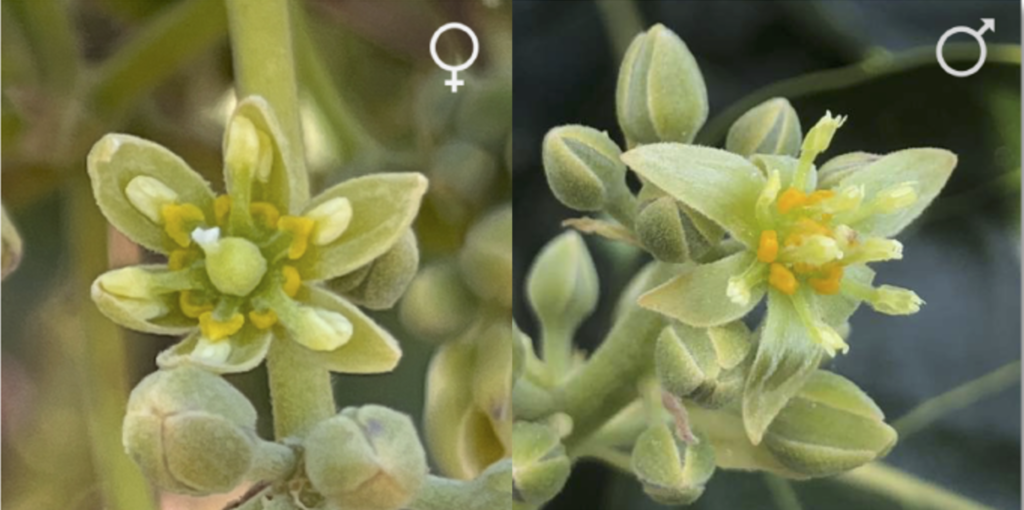
A dominant SDMYB haplotype corresponds to A-type flowering
Mapping in 374 individuals associated the A/B dimorphism with dominant and recessive haplotypes at SDMYB. The dominant haplotype confers A-type flowering, whereas recessive homozygotes show B-type flowering.
The key difference is timing of the second anthesis
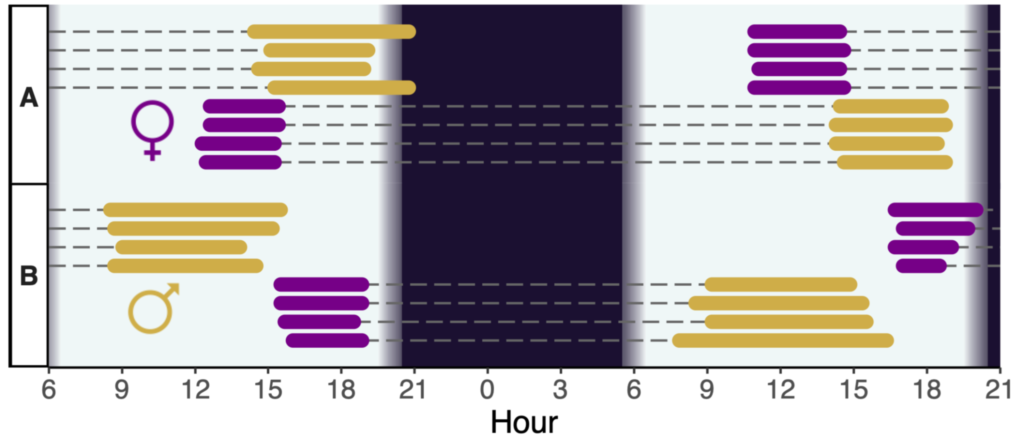
SDMYB expression is rhythmic in both types, but the dominant allele shows a cis-regulated phase delay that corresponds to the delayed second anthesis of A-type flowers. It is therefore more accurate to view SDMYB as a strong regulator of floral timing than as a simple ‘female versus male’ gene.
The allelic lineages predate modern avocado species
Related haplotypes occur across multiple Lauraceae species. Phylogenetic analyses indicate a trans-species polymorphism maintained for more than 44 million years, consistent with long-term balancing selection and negative frequency dependence. This does not mean modern avocado cultivars are 44 million years old; the allelic lineages are.
A useful breeding marker, not yet a complete clock mechanism
Because tree crops take years to flower, early DNA-based prediction of flowering type could improve breeding efficiency. The study did not edit SDMYB to convert A-type directly into B-type, and the downstream mechanism controlling anthesis remains incomplete.
For related context, see How Mirror-Image Flowers Are Built: A Supergene and Gravity Place Pollen on Opposite Sides of Pollinators.
For related context, see OsMYB8 Controls When Rice Florets Open—A Tool for Synchronizing Indica × Japonica Hybrid Seed Production.
For related context, see Crossing, Selfing or Cloning? Pinot Noir Pedigrees Reveal How Reproductive Systems Reshape Grapevine Genomes.
Reference
- Groh JS et al. Balanced polymorphism in a floral transcription factor underlies the ancient rhythm of daily sex alternation in avocado. Proceedings of the National Academy of Sciences USA. 2026;123(31):e2606876123. https://doi.org/10.1073/pnas.2606876123

Comments