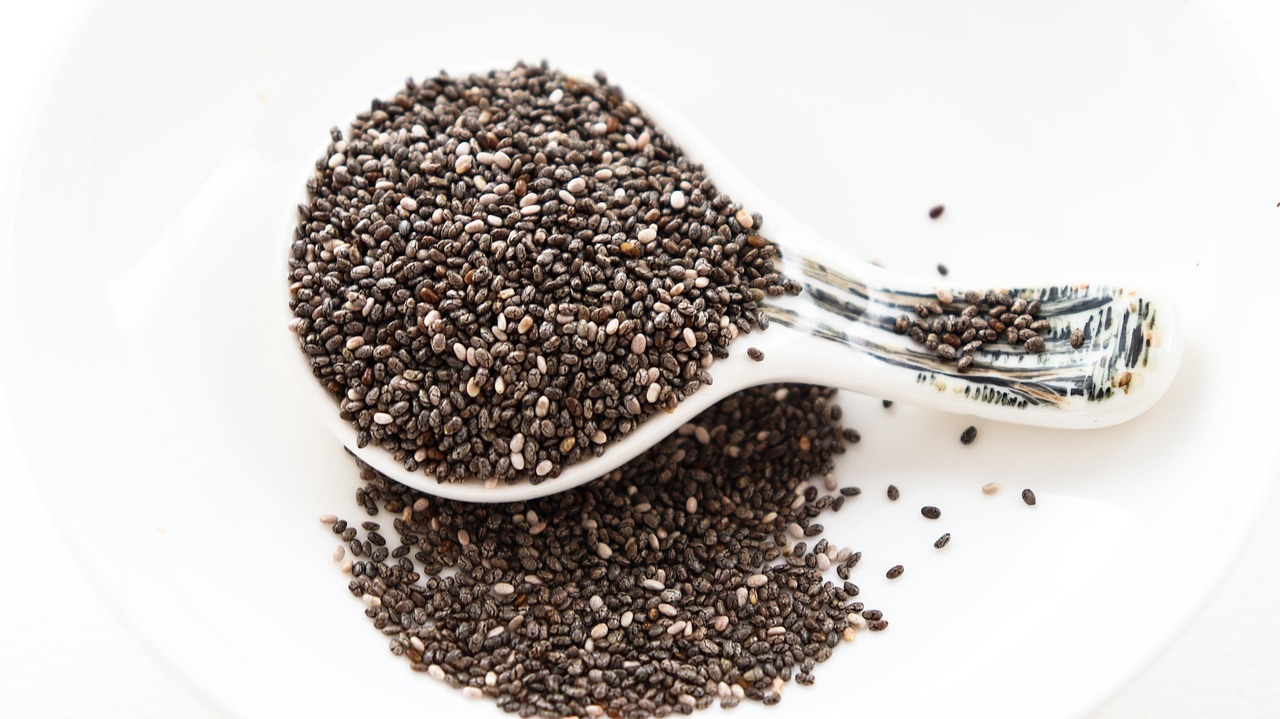
Chia (Salvia hispanica) seeds are rich in dietary fiber and alpha-linolenic acid (ALA), and their seed coat produces a distinctive mucilage gel when hydrated. These are well-established nutritional and materials-science features.
Health claims are more complicated. Meta-analyses through 2024 find small improvements in some outcomes, while body weight, glycemia, lipids and other endpoints are often inconsistent or non-significant. The 2026 evidence supports chia as a useful food ingredient—not a treatment that reliably produces major clinical changes.
Mucilage is a water-binding polysaccharide material
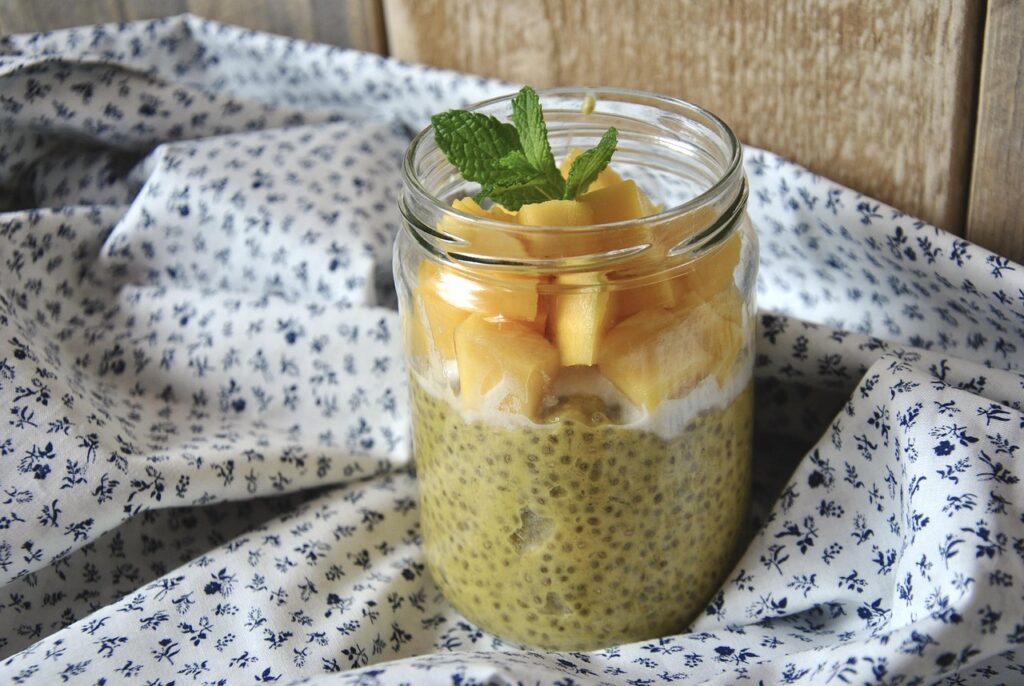
Hydrated chia seed coats release polysaccharides that form a gel. Food-science studies use this hydrocolloid for water retention, thickening, emulsion stability, reduced syneresis and encapsulation systems.
Its material properties are scientifically distinct from claims about human disease outcomes.
Chia provides ALA, not preformed DHA
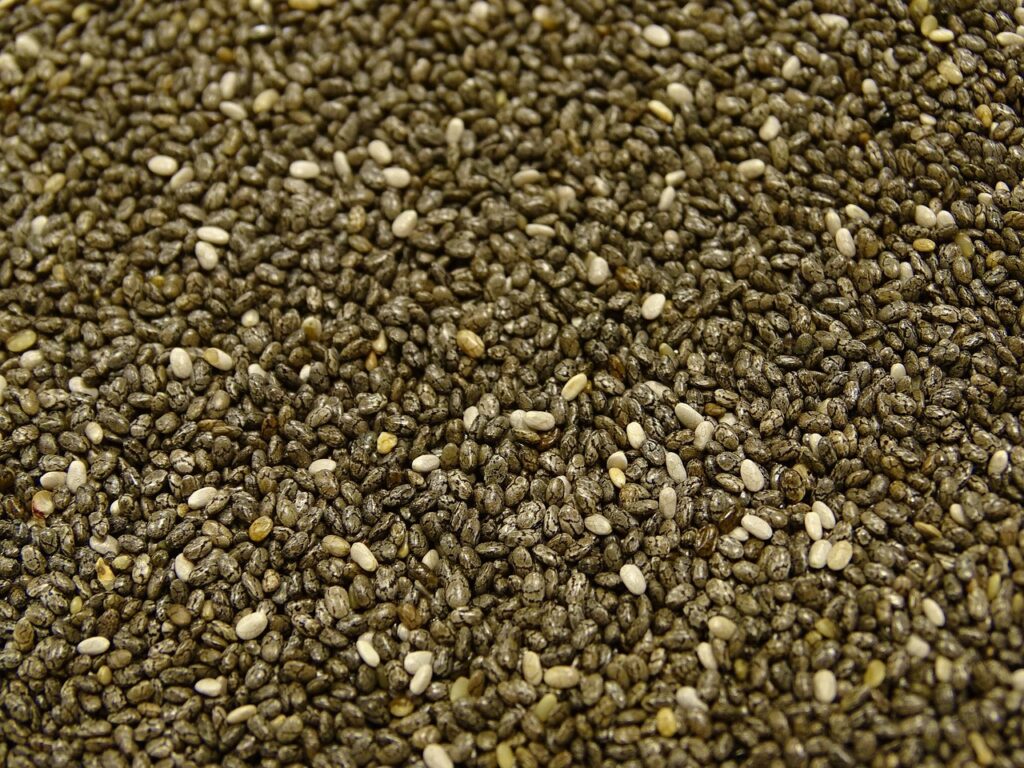
ALA is an essential omega-3 fatty acid. Humans can convert some ALA to EPA and DHA, but conversion is limited. Chia therefore should not be described as nutritionally equivalent to fish-derived EPA/DHA.
Intervention studies using milled chia have reported increases in circulating ALA and EPA, which is a plausible and relatively direct nutritional effect.
Cardiometabolic outcomes are modest and heterogeneous
Recent meta-analyses report small reductions in blood pressure or waist circumference in some analyses, but weight, BMI, blood glucose and lipid outcomes are mixed. Differences in dose, whole versus milled seed, study duration and participant characteristics matter.
Adding chia to a diet is not the same as demonstrating treatment of obesity, diabetes or cardiovascular disease.
Safety is usually straightforward, but dry seeds swell rapidly
Because chia absorbs water quickly, swallowing large amounts of dry seed can be problematic for people with swallowing or esophageal disorders. Hydrating the seeds or consuming them with adequate fluid is a practical food-handling measure. Allergic reactions are uncommon but have been reported.
Crop genomics and multi-omics are expanding the research field
Chromosome-scale genomic resources and multi-omic studies now support research on seed oil, phenolics, mucilage, flowering and yield. Strong short-day responses can limit maturation at higher latitudes, making flowering-time genetics a breeding target. Field studies are also addressing sowing date, irrigation and intercropping.
The useful 2026 conclusion is to separate four evidence layers: nutrient composition, food-material functionality, clinical outcomes and crop improvement. Chia is scientifically interesting in all four—but claims from one layer should not be borrowed as proof in another.
For related context, see How Different Are the Phytochemicals of 20 Salvia Species? Chemometrics as a Screening Tool, Not a Treatment Guide.
For related context, see Can Hazelnut Seed Skins Become Food Ingredients? Polyphenols, Antimicrobial Activity and Allergen Caveats.
For related context, see Where Alternative Proteins Stand in 2026: Comparing Plant-Based, Microbial, Insect and Cultivated Meat.
References
- Karimi M et al. Effects of chia seed supplementation on cardiometabolic health. Nutrition & Metabolism. 2024. https://doi.org/10.1186/s12986-024-00847-3
- Alejo-Jacuinde G et al. Multi-omic analyses reveal the unique properties of chia seed metabolism. Communications Biology. 2023. https://doi.org/10.1038/s42003-023-05192-4
- Jin F et al. 2012. PMID: 22538527


Comments