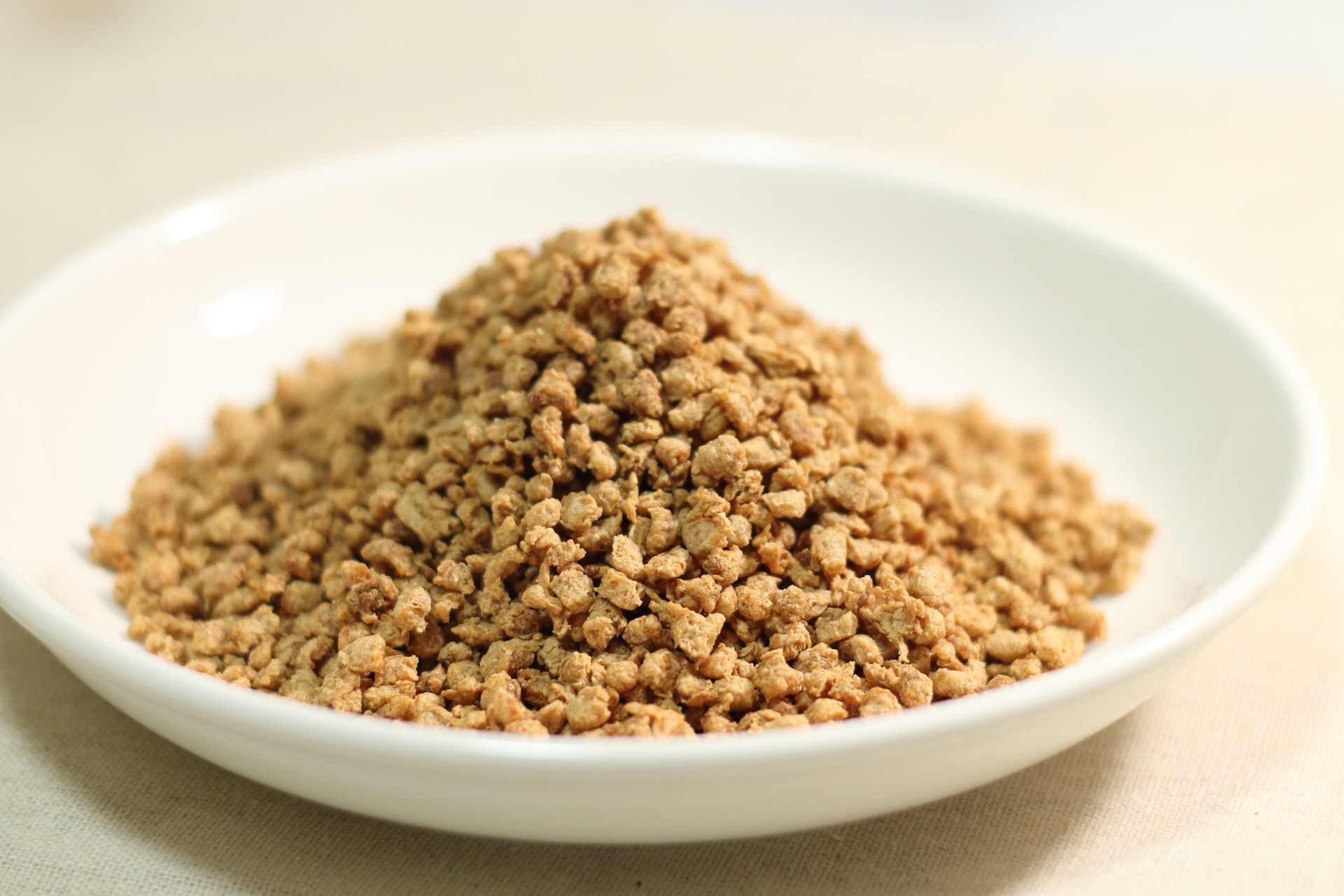
Alternative protein is not one technology. Plant-based meat, microbial or single-cell protein (SCP), insects and cultivated meat use fundamentally different production systems and face different bottlenecks.
A 2024 npj Science of Food review summarized environmental, technological, sensory, safety and regulatory challenges. A 2026 cross-category comparison went further and ranked plant-based meats as the most deployment-ready option, with SCP promising, cultivated meat still facing major technical/economic constraints, and insects encountering substantial acceptance and other barriers.
Plant-based meat is the most mature category

Plant proteins can use established agricultural and food-processing infrastructure, and many LCAs show substantially lower land use and greenhouse-gas emissions than beef. The 2026 comparison ranked plant-based meat highest across its multidimensional framework.
But processed meat analogues are not identical to minimally processed legumes or tofu. Extrusion, protein isolation, fats, binders, flavors and other ingredients add processing impacts, and nutritional profiles vary widely among products.
Microbial and single-cell proteins can be extremely land-efficient
Fungi, yeast, bacteria and microalgae can be cultivated in fermentation systems with very small land footprints. Some systems can use agro-industrial side streams or alternative carbon inputs.
Their environmental performance, however, depends strongly on electricity, substrate production, aeration, drying and downstream processing. The 2026 review places SCP as promising but still uncertain in large-scale deployment and consumer familiarity.
Insects are efficient organisms but not automatically a low-impact food
Feed conversion and land use can be favorable, yet heating, feed production, drying, defatting and de-chitinization can change the life-cycle result. Consumer rejection remains a major barrier in many Western markets, although cultural acceptance differs strongly by region.
Cultivated meat still has a scale problem
Cultivated meat can reduce direct livestock and land use, but large-scale sterile animal-cell culture requires growth media, bioreactors, oxygen transfer, mixing, cooling and downstream processing. Climate performance therefore depends heavily on energy and media efficiency.
Commercial approvals and pilot products demonstrate technical feasibility, but they do not mean production is ready to replace conventional meat at global scale. The 2026 comparison still identifies major cost and scalability challenges.
There is no single winner for every use case
Plant-based products currently have the strongest combination of infrastructure and acceptance. Fermentation proteins can be attractive where land is scarce or circular feedstocks are available. Cultivated meat may be valuable where actual animal-cell tissue is important, and insect protein may fit specific regional food or feed systems.
The useful question is not whether “alternative protein is sustainable.” It is whether a specific product, made with a specific energy mix and raw-material system, performs well on land, climate, nutrition, safety, price and consumer acceptance.
For related context, see Engineering Koji Mold for Meat Alternatives: More Heme and Ergothioneine in Aspergillus oryzae.
For related context, see Why Were Canadian Canola, Wheat and Peas Lower-Carbon? Production Conditions Can Outweigh Food Miles.
For related context, see Seaweed Feed Is Not One Technology: Separate Antimicrobial Extracts from Asparagopsis Methane Mitigation.
For related context, see What Is High-Fructose Corn Syrup? A Huge Food-Industry Technology Built from Plant Starch and Enzymes.
References
- Malila Y et al. Current challenges of alternative proteins as future foods. npj Science of Food. 2024;8:53. https://doi.org/10.1038/s41538-024-00291-w
- Bry-Chevalier T. Comparing meat alternatives for a sustainable food system. npj Science of Food. 2026;10:119. https://doi.org/10.1038/s41538-025-00694-3
- Alternative proteins: innovations in sources, processing, and consumption. Frontiers in Sustainable Food Systems. 2025. https://doi.org/10.3389/fsufs.2025.1641712

Comments