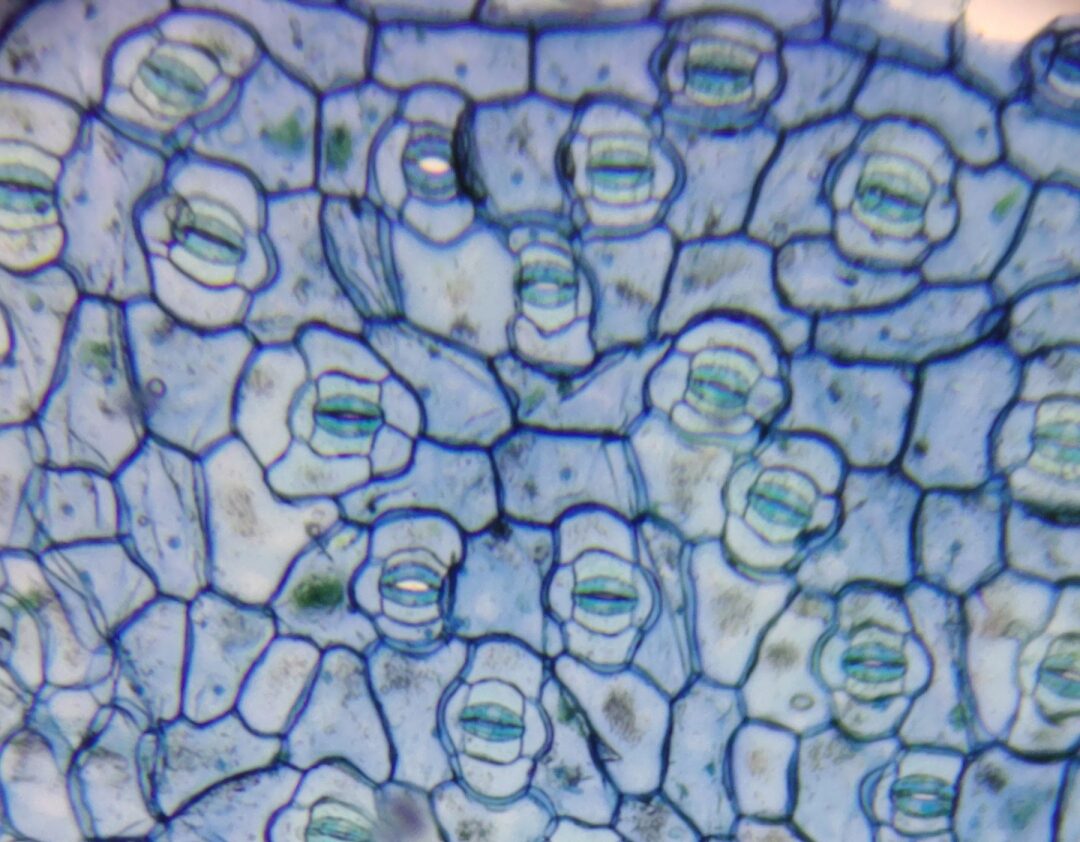
A 2025 Nature Plants study showed that stomata on the adaxial and abaxial leaf surfaces are not molecularly identical. In Arabidopsis and tobacco, the lower-surface stomata showed stronger light-induced opening, and guard cells on the two surfaces relied on different compositions of inward K⁺ channels.
Single-cell and genetic analyses pointed to different K⁺ channel usage
Single-cell RNA sequencing, transcriptomics, OnGuard simulations and genetic manipulations converged on surface-specific use of Shaker-type K⁺ influx channels. KAT1 made a particularly strong contribution to the abaxial light response, while adaxial guard cells used a different channel composition including AKT1.
The study did not directly prove a whole-plant water-saving adaptation
It is plausible that surface-specific stomatal behavior contributes to balancing CO₂ uptake and water loss, but the paper directly demonstrates channel composition and light-response asymmetry—not field-level fitness or water-use-efficiency gains.
The work therefore adds an important layer to stomatal biology and suggests future surface-specific engineering strategies that still require crop validation.
For related context, see Biostimulants Are Not Limited to Natural Products — Could Plant Agriculture Move Toward Targeted 'Drug Discovery'?.
For related context, see When a Phytotoxin Promotes Growth: Fusicoccin Activates the Guard-Cell H+-ATPase–14-3-3 System.
For related context, see Microscope View of White Clover Leaf Teeth — What Can We Really Infer from the Reddish-Purple Margin?.
For related context, see Human LYCHOS Contains a Plant-PIN-Like Transporter Domain—It Is Not a Plant Protein Inside Humans.
Reference
- Wei J et al. Guard cells on the adaxial and abaxial leaf surfaces use different compositions of potassium ion channels to drive light-induced stomatal opening. Nature Plants. 2025;11:1260–1269. https://doi.org/10.1038/s41477-025-02026-5

Comments