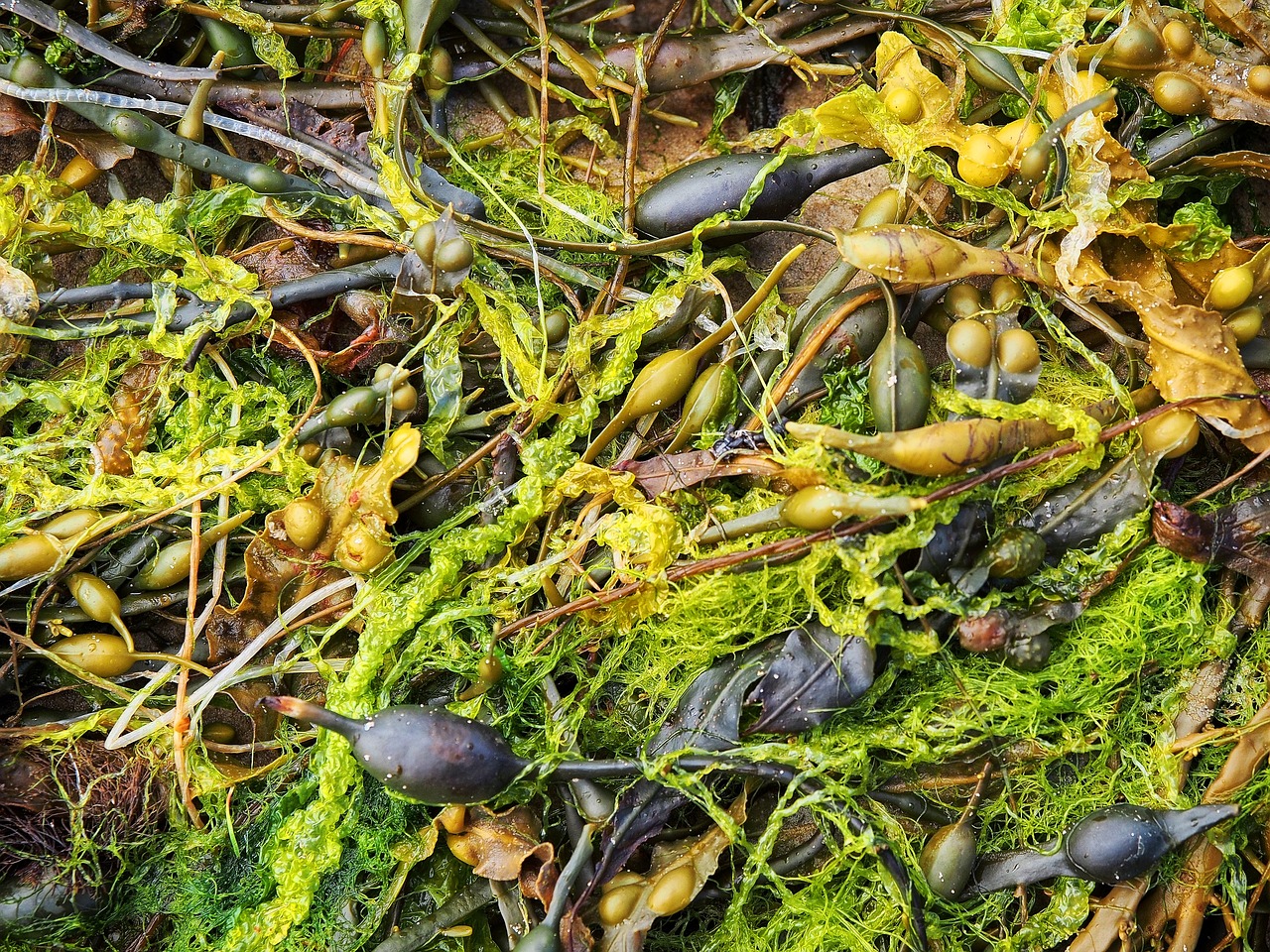
Seaweed research in livestock is often blended into one story, but at least two very different evidence streams exist. Extracts from seaweeds such as Ascophyllum and Ulva are studied for antimicrobial and antioxidant activity, while Asparagopsis species are used as bromoform-containing feed additives to suppress enteric methane in ruminants.
The previous version of this article mixed the two. Its linked 2024 Scientific Reports paper (s41598-024-71961-8) is an in-vitro study of antibacterial and antioxidant seaweed extracts, not a feeding trial showing improved livestock health or meat quality.
The 2024 extract paper was not a livestock feeding experiment
Laboratory antimicrobial and antioxidant assays can identify promising compounds, but they do not show that feeding those extracts prevents infections, reduces antibiotic use or improves meat quality in farm animals. Those outcomes require animal trials.
Asparagopsis methane mitigation is a separate, stronger evidence base
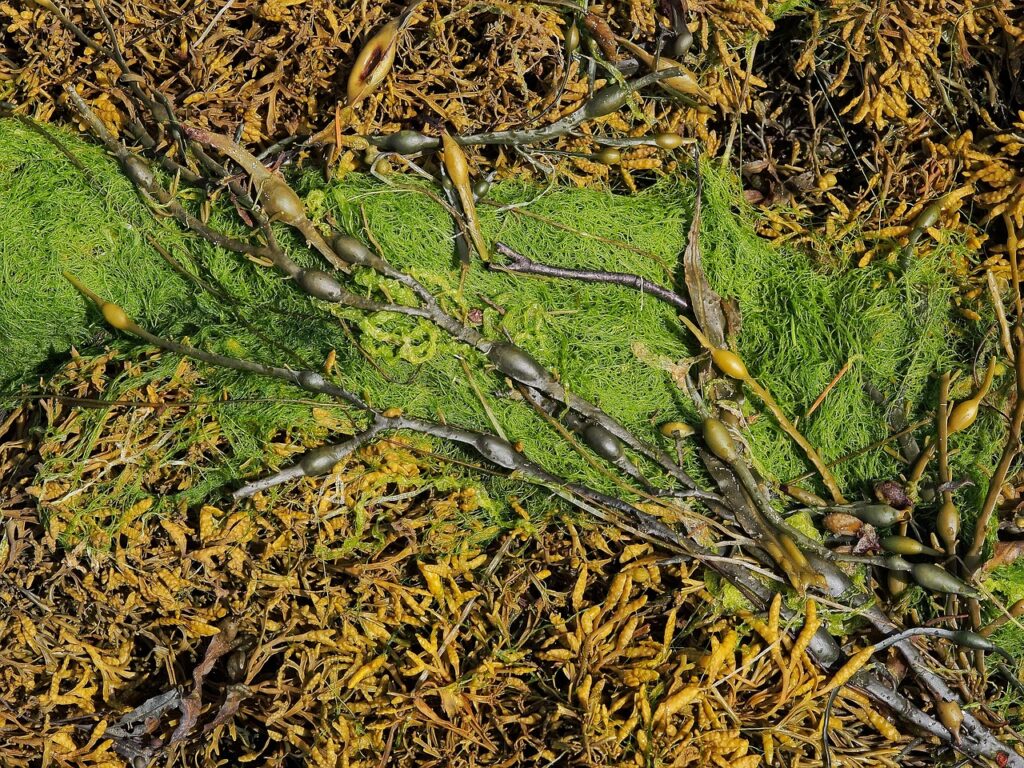
Red seaweeds Asparagopsis taxiformis and A. armata contain bromoform, which strongly inhibits rumen methanogenesis. A 2025 Journal of Dairy Science meta-analysis combined 14 studies and 39 treatment mean differences.
At an average bromoform dose of about 28.3 mg/kg dietary DM, estimated methane production decreased 47.3%, methane yield 43.3% and methane intensity 39.0%.
Feed intake and milk production can decline too
The same meta-analysis estimated lower dry-matter intake: −6.45% in dairy cattle and −3.26% in beef cattle at the average dose. Dairy milk yield decreased by 4.60%. Effects varied by cattle type, dietary starch/NDF and bromoform dose.
The technology therefore cannot be summarized as “less methane with no production cost.”
A 2026 dairy trial highlighted storage and productivity issues
A 2026 Journal of Dairy Science study fed 18 Holstein cows diets containing 0.50% or 0.75% A. taxiformis. Daily methane emissions fell by up to 30%, but DMI fell by up to 22% and energy-corrected milk by up to 14%.
The study also investigated declining bromoform stability during long-term seaweed storage, showing that feed-additive potency can change with product handling and time.
Seaweed species have different functions and risks
Polyphenol-rich Ascophyllum extracts, Ulva biomass and bromoform-rich Asparagopsis are not interchangeable ingredients. For Asparagopsis, bromoform exposure, residues, feed quality, production scale and standardization are central questions.
Life-cycle analysis also has to include cultivation, drying, processing and transport. Growing seaweed in the ocean does not automatically make a feed additive carbon-neutral.
As of 2026, Asparagopsis/bromoform is one of the strongest biological enteric-methane mitigation approaches, but practical value depends on optimizing methane reduction, animal intake and productivity, bromoform dose, safety and cost at the same time.
For related context, see Can Tannins Reduce Cattle Methane? Four Purified Forage Extracts Cut In-Vitro CH4 by Up to 15%.
For related context, see Why Were Canadian Canola, Wheat and Peas Lower-Carbon? Production Conditions Can Outweigh Food Miles.
For related context, see Where Alternative Proteins Stand in 2026: Comparing Plant-Based, Microbial, Insect and Cultivated Meat.
References
- Assessment of the antibacterial and antioxidant activities of seaweed-derived extracts. Scientific Reports. 2024. https://doi.org/10.1038/s41598-024-71961-8
- van Gastelen S et al. A meta-analysis of effects of seaweed and other bromoform-containing feed ingredients on methane production, yield, and intensity in cattle. Journal of Dairy Science. 2025;108:11071–11093. https://doi.org/10.3168/jds.2025-26960
- The macroalga Asparagopsis taxiformis decreases dry matter intake and milk production in dairy cows. Journal of Dairy Science. 2026;109:3914–3927. https://doi.org/10.3168/jds.2025-27377
Comments