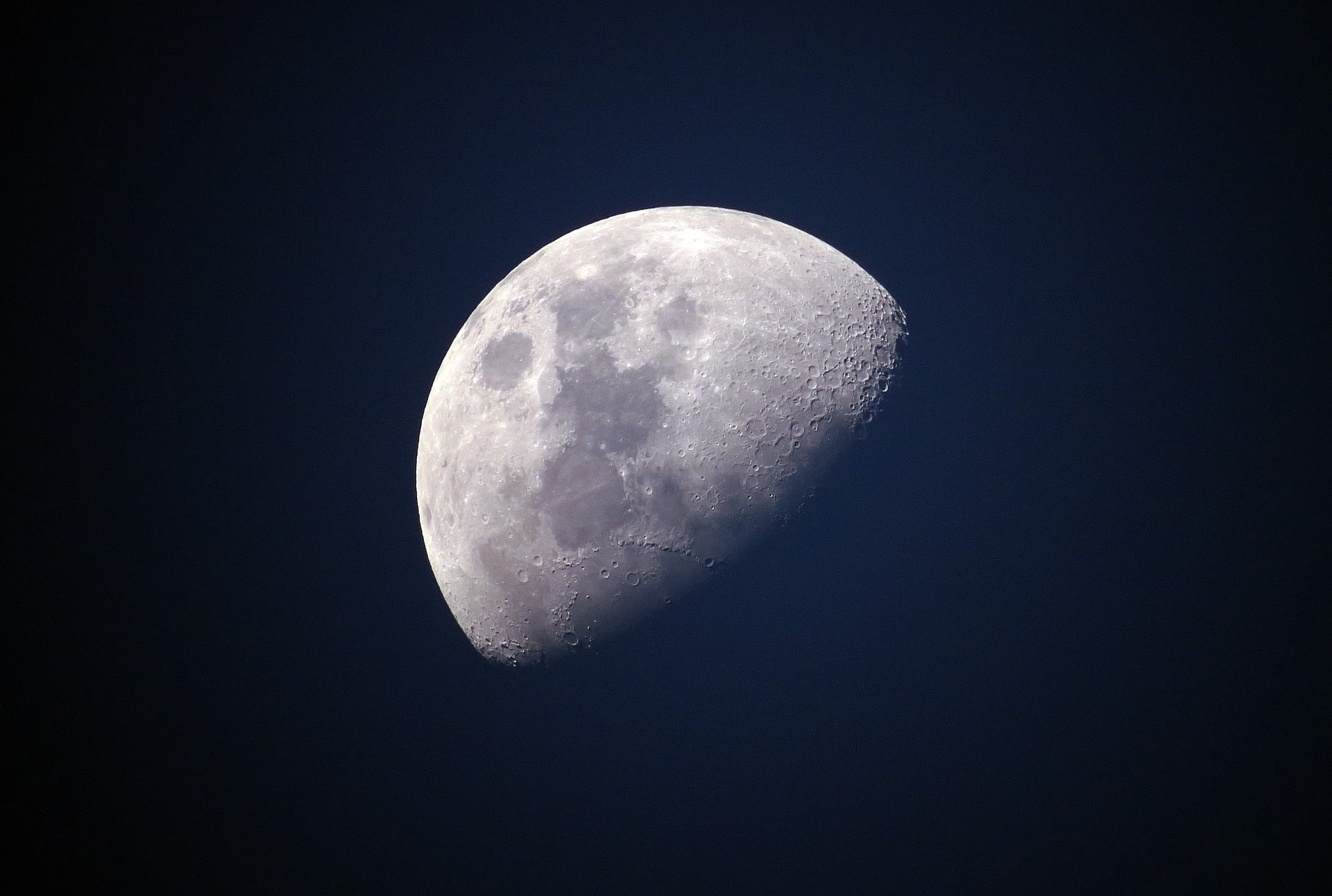
A 2023 Communications Biology study is sometimes summarized as growing plants in Moon soil with Earth bacteria. The experiment actually used a lunar regolith simulant made on Earth, not Apollo-returned lunar material.
The question was whether phosphorus-solubilizing bacteria (PSB) could release insoluble phosphorus from a regolith-like substrate and make it more suitable for plant growth.
The substrate was a terrestrial lunar-regolith simulant

The material was designed to mimic lunar regolith properties. Apollo 14 soil data informed the comparison, but Apollo material itself was not used as the cultivation substrate.
Three bacterial species tolerated the simulant and mobilized phosphorus
Five PSB species were screened. Bacillus mucilaginosus, Bacillus megaterium and Pseudomonas fluorescens tolerated the simulant and increased available phosphorus during a 21-day bio-improvement experiment.
Nicotiana benthamiana was grown for 24 days

Plants grown in bacteria-treated simulant performed better than plants in untreated simulant. This demonstrates improved phosphorus availability, not a complete self-sufficient lunar agriculture substrate. Lunar regolith lacks organic carbon and nitrogen and contains many nutrients in poorly available forms.
This is microbial substrate engineering, not terraforming
The result is relevant to in-situ resource utilization for future bioregenerative life-support systems. Many actual lunar conditions—radiation, low gravity, vacuum, temperature extremes and complete nutrient cycling—were outside the experiment.
It is therefore best described as a proof of concept for microbial improvement of a regolith-derived growth substrate.
The 2026 Author Correction fixed particle-size labels
An Author Correction published on June 16, 2026 corrected the labels in Fig. 1a. The correct top-to-bottom order is 0.3–0.5 mm, 0.5–0.9 mm and >5 mm. The correction did not overturn the plant-growth conclusions.
For related context, see Moss Photosynthesis Increased at 6–10G: IBSH1/AP2-ERF Links Hypergravity to CO₂ Diffusion.
For related context, see Using Amino Acid Transporters as Nanoparticle Entry Receptors: Asp/PDPA-NP Delivers Cargo into Plant Cells Within Minutes.
For related context, see Pseudomonas Rescues a Stressed Cyanobacterium in an Engineered Sucrose-Sharing Co-Culture.
References
- Xia Y et al. Phosphorus-solubilizing bacteria improve the growth of Nicotiana benthamiana on lunar regolith simulant by dissociating insoluble inorganic phosphorus. Communications Biology. 2023;6:1039. https://doi.org/10.1038/s42003-023-05391-z
- Xia Y et al. Author Correction. Communications Biology. 2026;9:827. https://doi.org/10.1038/s42003-026-10421-7



Comments