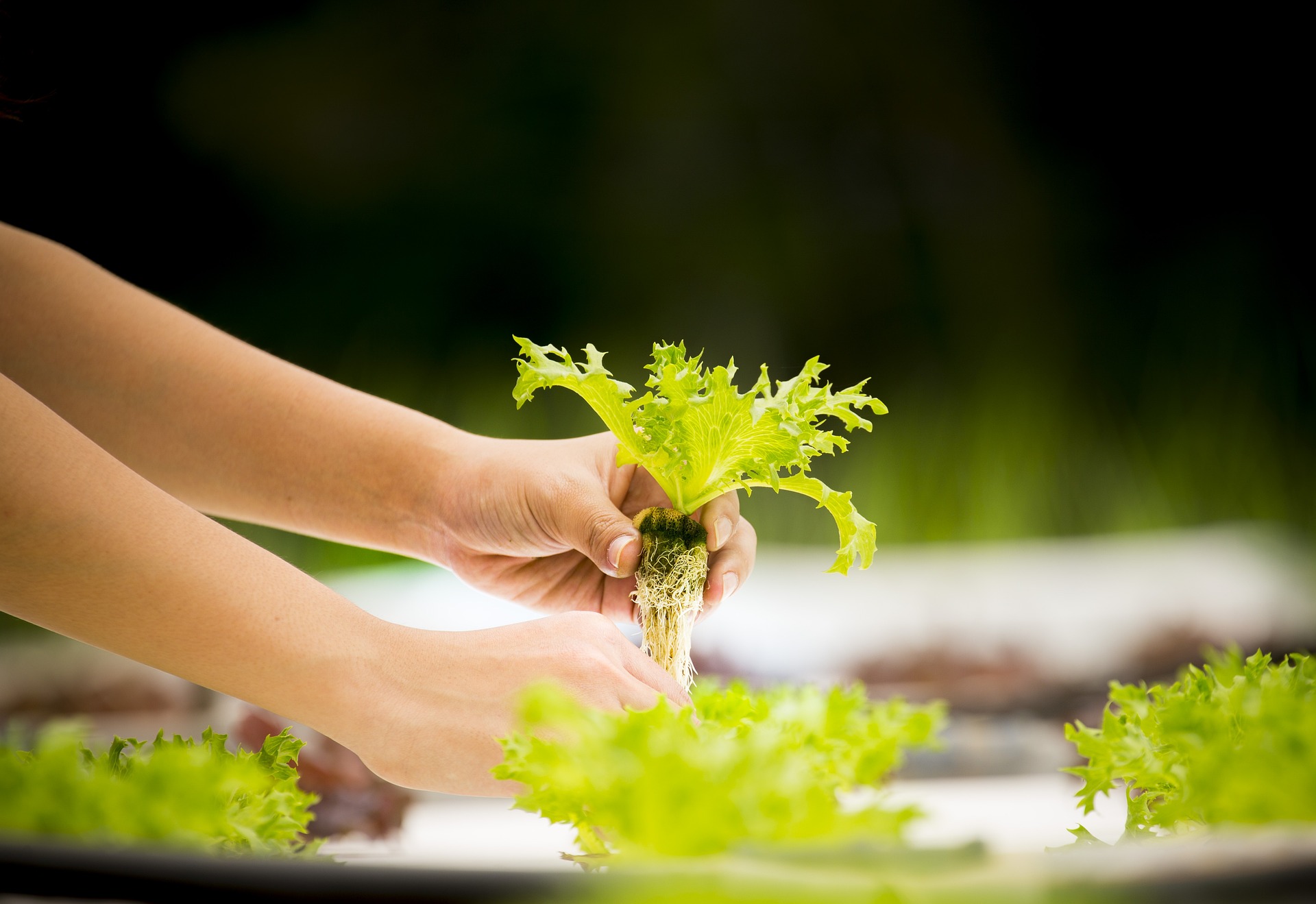
A 2023 Scientific Reports study tested two lettuce cultivars under four LED spectra and three nutrient-solution replacement strategies in NFT and floating hydroponic systems.
Four spectra and three nutrient strategies

White, red, blue and red/blue (3:1) LEDs were compared with complete nutrient replacement, EC-based replacement and a study-defined plant-needs strategy. PPFD was 215 ± 5 µmol m−2 s−1 with a 16/8 h photoperiod.
Red–blue was useful, not universally optimal

Red/blue lighting frequently increased shoot fresh mass and yield index, but responses depended on cultivar, nutrient strategy and hydroponic system. In some conditions Lollo Bionda performed better under blue light.
The study therefore does not establish one universal “best LED color.”
Complete replacement used much more water

In the NFT experiment, roughly 60 L of water was used over 42 days under complete replacement versus about 15 L under EC-based or plant-needs replacement. However, recycling solution also changed nutrient composition: N, K and Zn accumulated while Fe declined.
The practical lesson is multi-factor optimization. EC alone does not describe individual nutrient concentrations, and the best light/nutrient strategy depends on cultivar, energy prices, water cost and production goals.
For related context, see A 4.5-µm Transparent Plant E-Skin Monitors Leaf Growth and Surface Temperature in Real Time.
For related context, see Upper and Lower Leaf Stomata Use Different K⁺ Channel Compositions for Light-Induced Opening.
For related context, see Can Ethanol Prime Crops Against Heat? The Evidence Is Promising, but There Is No Universal Spray Recipe.
Reference
- Soufi HR et al. The plant growth, water and electricity consumption, and nutrients uptake are influenced by different light spectra and nutrition of lettuce. Scientific Reports. 2023;13:20766. https://doi.org/10.1038/s41598-023-48284-1
Comments