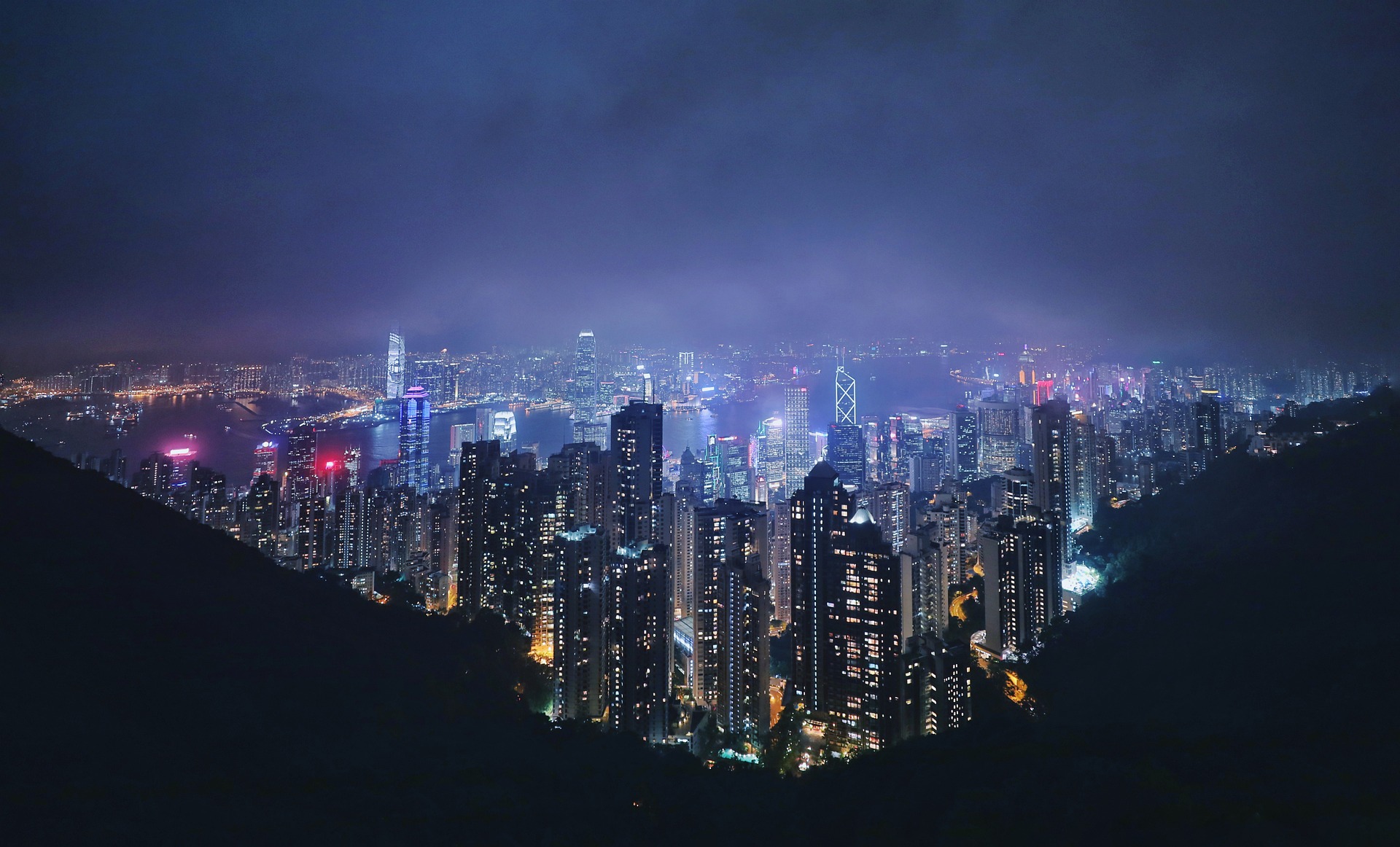
Artificial light at night (ALAN) is increasingly common in urban environments. A 2023 PeerJ study exposed wild-derived dotted duckweed (Landoltia punctata) to either dark nights or artificial night lighting for 49 days.

Each condition contained 80 samples starting with 2–3 fronds. Plants received natural daylight, while only the nighttime light treatment differed.
More fronds and larger plant area under ALAN

The ALAN group produced more fronds and greater total area under the experimental conditions. The result therefore was not a simple growth suppression response.
Leaf undersides also became darker. The authors discuss pigmentation and possible stress responses, but pigments were not chemically quantified, so darker color should not be treated as direct proof of physiological stress.
A one-species, two-box experiment

The study used one duckweed species and one large box per treatment. This leaves a box-level pseudo-replication limitation, and the result cannot be generalized directly to crops, street trees or forest plants.
Responses to ALAN depend on wavelength, intensity, duration, season and species-specific photoperiod biology.
The useful lesson is that artificial night light can act simultaneously as an additional energy source and as a biological timing signal. Plant responses are therefore more complex than simply “beneficial” or “harmful.”
For related context, see Hydroponic Lettuce Cannot Be Optimized by Red–Blue LEDs Alone: A 42-Day Light × Nutrient Study.
For related context, see Upper and Lower Leaf Stomata Use Different K⁺ Channel Compositions for Light-Induced Opening.
For related context, see Large Trees Are Increasing in the United States and Amazonia—but That Does Not Prove Warming Made Trees Bigger.
Reference
- Nakagawa-Lagisz T, Lagisz M. Shining a light on duckweed: exploring the effects of artificial light at night (ALAN) on growth and pigmentation. PeerJ. 2023;11:e16371. https://doi.org/10.7717/peerj.16371
Comments