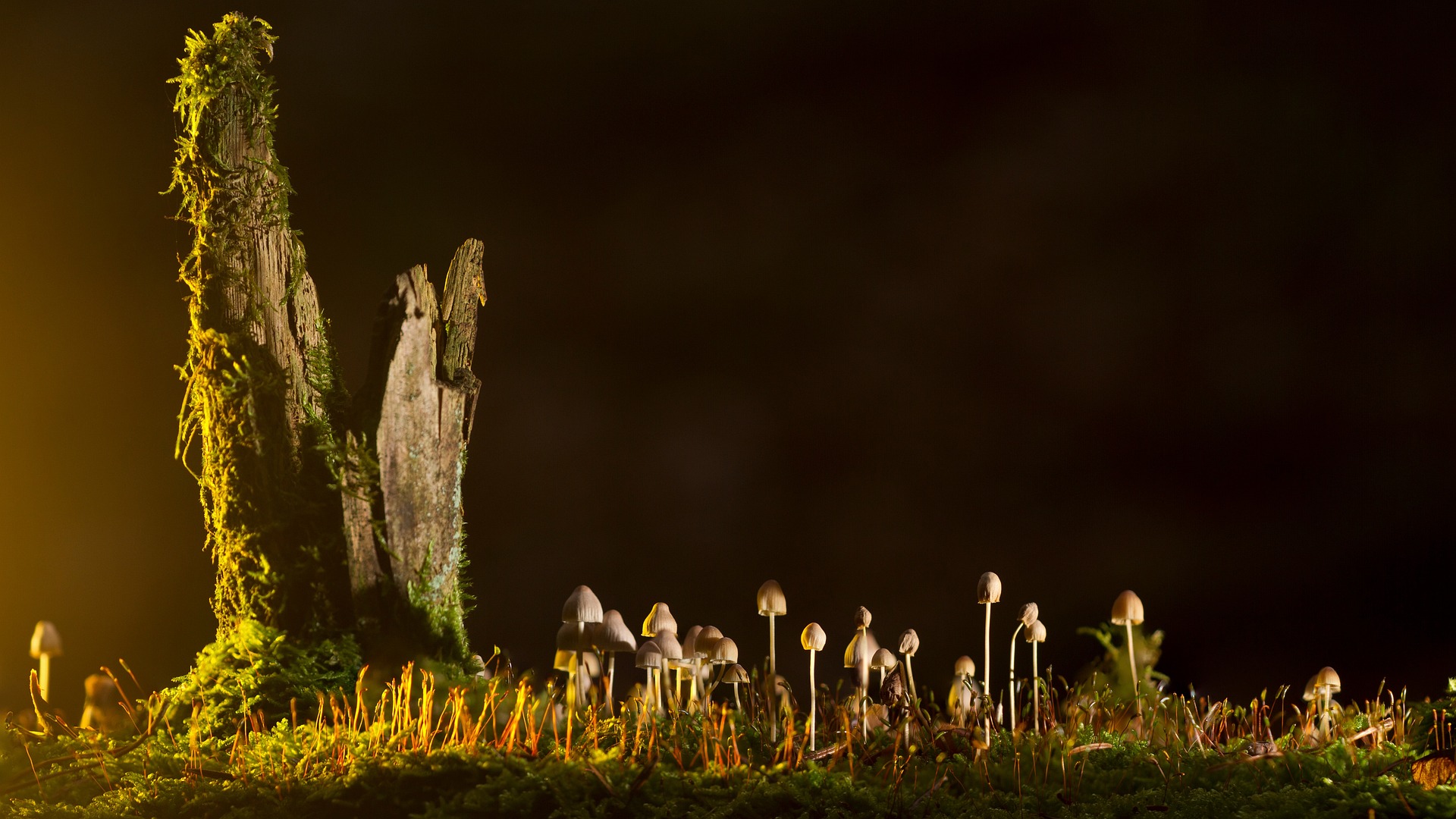
Fairy rings appear as circular bands of mushrooms or altered vegetation. A 2023 Scientific Reports study built a six-equation process-based model to test which long-standing hypotheses can reproduce these spatial patterns.
The study did not prove one universal mechanism for every fairy ring in nature. It tested which mechanisms are sufficient within the model and identified measurements needed for field validation.
Fungal self-inhibition can generate the ring shape

When fungal growth expands radially without an internal inhibitory process, a disk-like colony is difficult to avoid. Adding a self-inhibitory compound that accumulates after fungal death causes the inner mycelium to decline while the active front continues outward, producing a ring.
The authors discuss extracellular self-DNA as one possible inhibitor, but the model does not identify the responsible compound in a natural fairy ring.
Soil hydrophobicity can reproduce vegetation suppression

Some fairy rings contain a belt of weak or dead vegetation. In the model, reduced water infiltration caused by hydrophobic fungal mats was sufficient to reproduce several observed ring types. A phytotoxin-only mechanism could not reproduce all patterns.
This does not prove that phytotoxins are absent; it shows that altered soil-water availability can explain a large part of the pattern in the model.
Plant stimulation requires an additional positive effect
To reproduce lush vegetation bands, the model required growth-promoting fungal compounds in addition to nutrient release. These compounds are related to the broader concept of “fairy chemicals.”
The work therefore frames fairy rings as an emergent pattern produced by combinations of fungal self-inhibition, soil water, phytotoxicity, nutrient cycling and phytostimulation.
The model is also a field-research guide
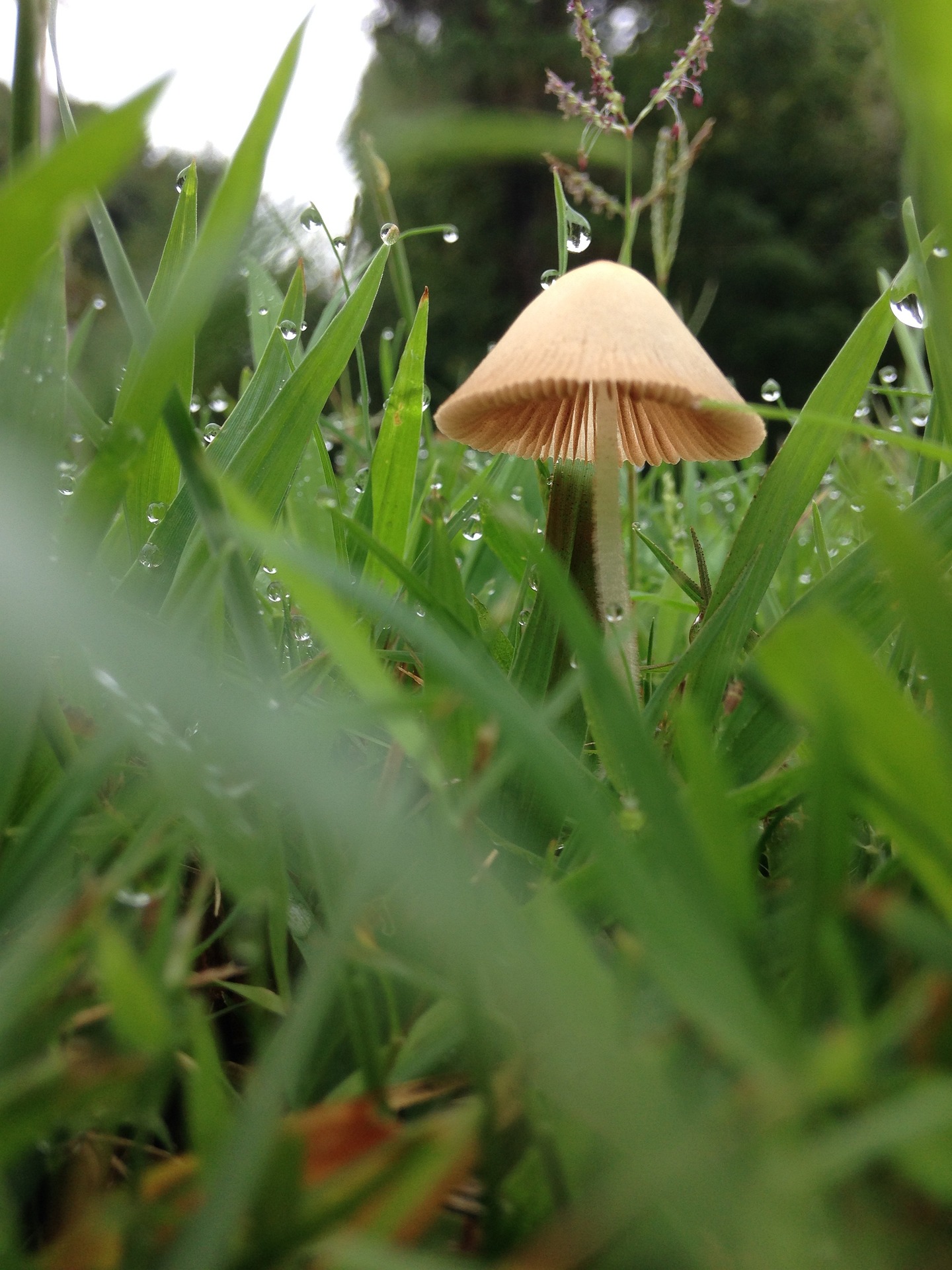
The authors proposed measurable variables such as fungal biomass, plant stimulation and inhibition, bare-zone width and ring width. Longitudinal field measurements can now test which mechanisms dominate in particular fairy rings.
For related context, see Crop Diversification Reshapes Peanut Root Exudates and Soil Microbes to Increase Nitrogen Fixation.
For related context, see Pseudomonas Rescues a Stressed Cyanobacterium in an Engineered Sucrose-Sharing Co-Culture.
For related context, see A Fog-Harvesting Grass Creates ‘Fog-Plant-Oases’ That Fuel an Aboveground Food Web in the Namib Desert.
For related context, see The Microbiome Inside Cecropia Ant Nests Matures with Azteca Colony Development.
Reference
- Salvatori N et al. Process based modelling of plants–fungus interactions explains fairy ring types and dynamics. Scientific Reports. 2023;13:19918. https://doi.org/10.1038/s41598-023-46006-1
Comments