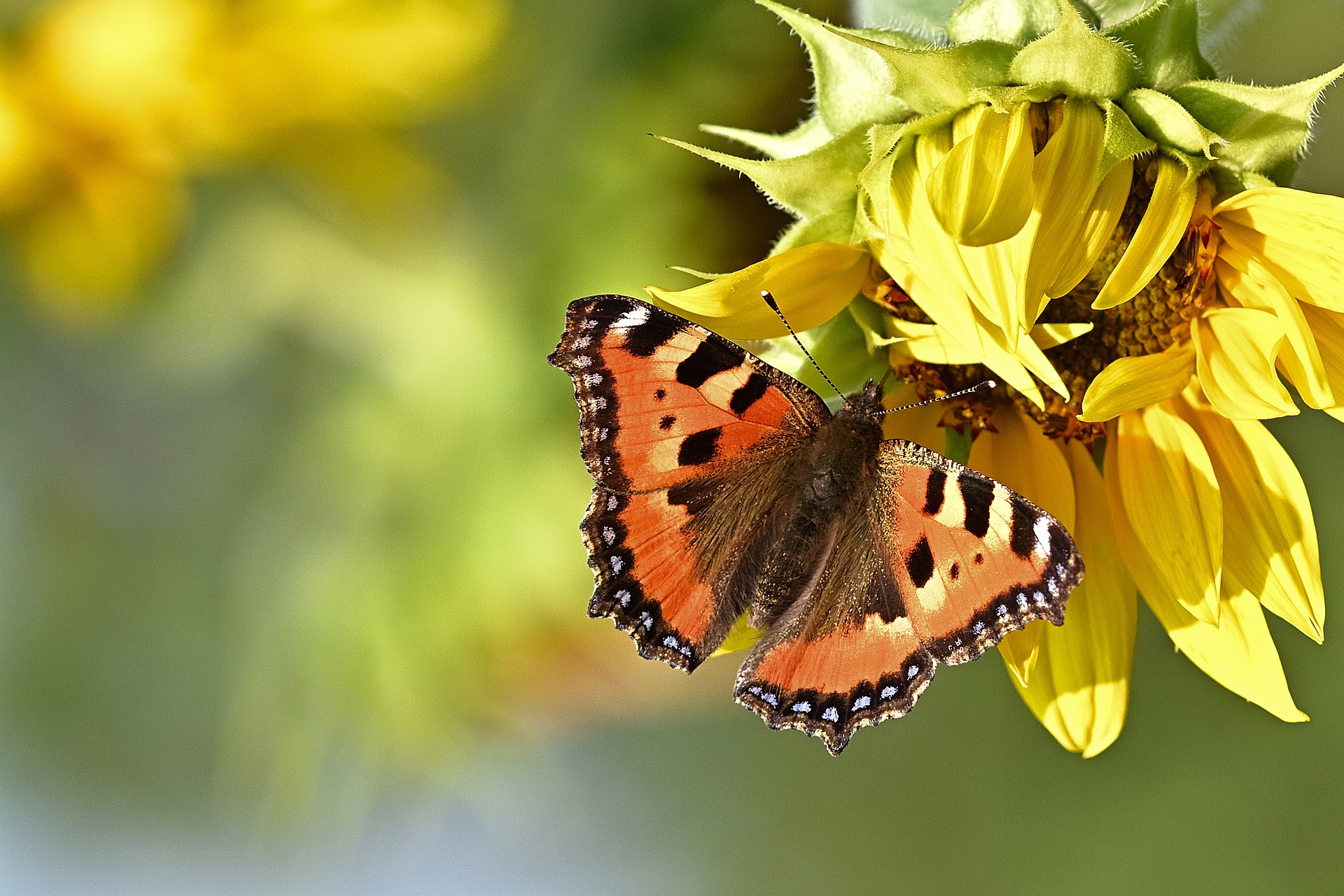
Sodium is nonessential for most plants but essential for animals. A 2023 Scientific Reports study tested whether that nutritional mismatch can change herbivore behavior.
Researchers grew sunflower plants under different hydroponic sodium treatments and fed them to sibling groups of bordered patch butterfly larvae (Chlosyne lacinia).
Low plant sodium was associated with more cannibalism
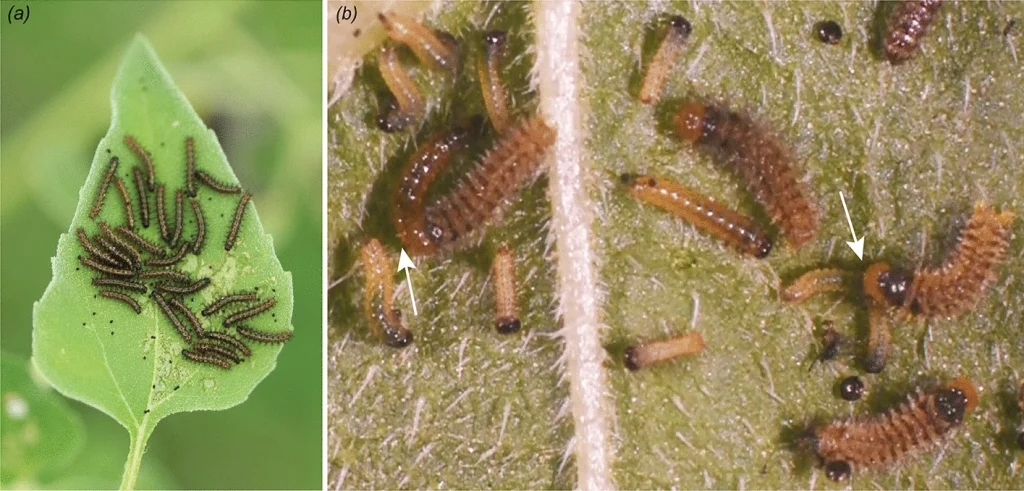
Across two experiments, larvae eating low-sodium sunflower tissue cannibalized siblings more often. Cannibalism was nearly absent at higher plant sodium concentrations.
The result is consistent with strong sodium limitation, although the study did not directly measure a behavioral sodium-seeking mechanism.
High sodium was not simply beneficial
At the highest sodium levels, mortality from causes other than cannibalism increased. Sodium treatment also changed leaf water content and specific leaf area, so not every performance effect can be attributed uniquely to sodium itself.
The study therefore does not imply that adding salt improves insect health. Instead it suggests that variation in plant sodium can reshape herbivore behavior and survival in complex ways.
For related context, see Pollen Species Change Honey-Bee Metabolism: Six Monodiets Altered Fat Body and Energy Reserves.
For related context, see What Does Plant Resistance Mean? Maize–Mite Interactions Explain Antixenosis, Antibiosis and Tolerance.
For related context, see Genomic Prediction Can Choose Better Genotype Mixtures: Arabidopsis Pairs Reduced Herbivory by 18–30%.
Reference
- Santiago-Rosario LY et al. Low sodium availability in hydroponically manipulated host plants promotes cannibalism in a lepidopteran herbivore. Scientific Reports. 2023;13:20822. https://doi.org/10.1038/s41598-023-48000-z
Comments