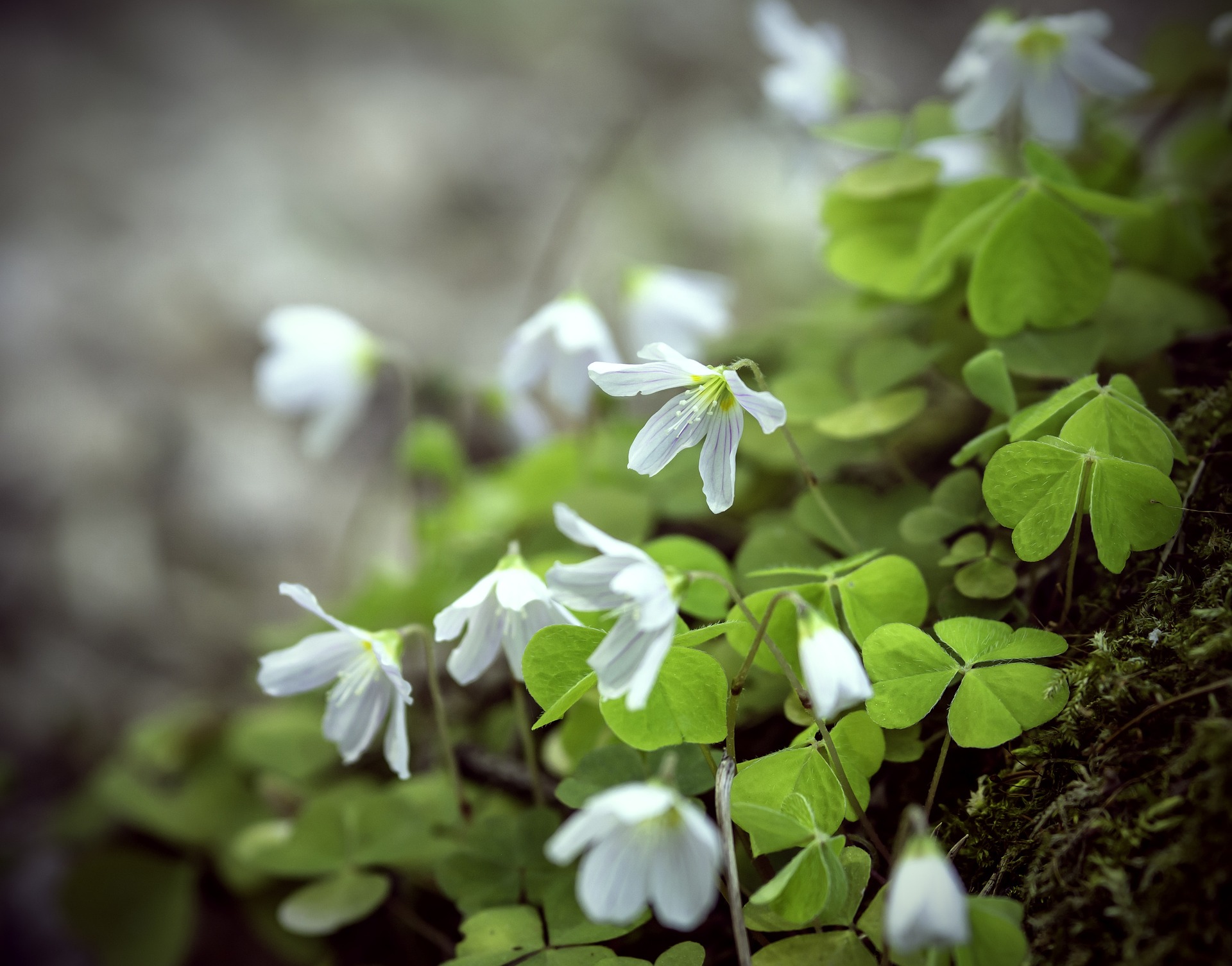
Oxalis corniculata occurs as green- and red-leaved forms. A 2023 Science Advances study combined local, landscape and global observations with growth, photosynthesis and population-genetic experiments to test whether the polymorphism reflects adaptation to urban heat islands.

Red leaves were more common in cities
Across multiple spatial scales, red-leaved plants were enriched in urban habitats while green-leaved plants dominated greener environments.
A clear performance trade-off

Under nonstress conditions, green-leaved plants generally accumulated more biomass and produced more seed pods. Under heat stress—including 35°C chamber experiments and a brick-pavement simulation—red-leaved plants showed better survival, growth or reproduction, and maintained higher PSII efficiency.
Anthocyanin is associated with the phenotype, not the entire proven mechanism

Red leaves contained more anthocyanin and chlorophyll, and the pigment spectrum was consistent with anthocyanin. Light attenuation and antioxidant effects are plausible mechanisms, but the study did not isolate anthocyanin as the sole causal basis of heat tolerance.
Population genetics suggests repeated evolution

A 5,282-SNP analysis of 136 individuals around Tokyo suggested that red-leaf phenotypes may have evolved multiple times from green ancestors.
This makes O. corniculata a visible example of rapid adaptation to a human-created urban environment.
For related context, see How Much Could Japan's Alpine Autumn Colors Fade? Earlier Green-Up Predicts Lower Brightness.
For related context, see Large Trees Are Increasing in the United States and Amazonia—but That Does Not Prove Warming Made Trees Bigger.
For related context, see Purple Woodsorrel Petal Patterns Under the Microscope: Dark Veins Are Built from Differently Pigmented Cells.
Reference
- Fukano Y et al. From green to red: Urban heat stress drives leaf color evolution. Science Advances. 2023;9:eabq3542. https://doi.org/10.1126/sciadv.abq3542
Comments