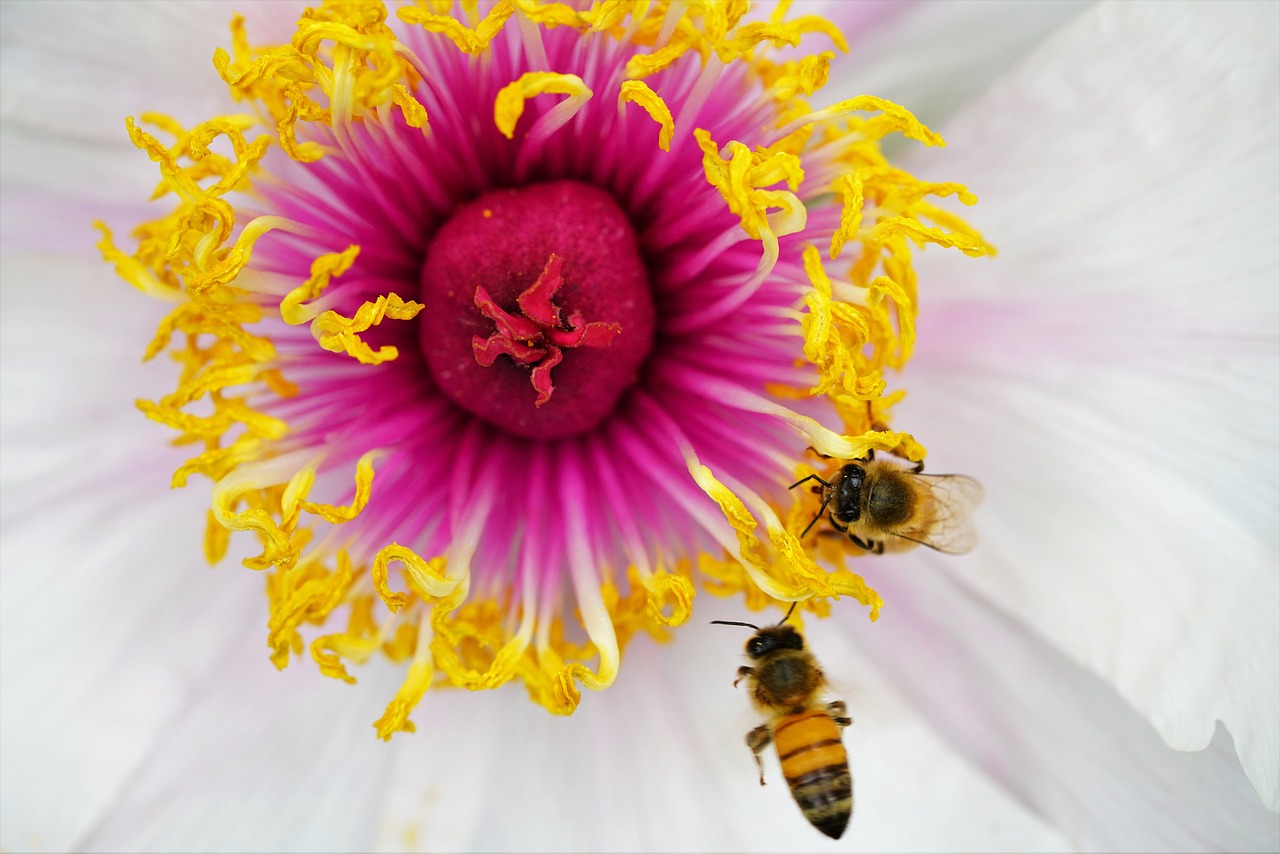
Pollen supplies honey bees with protein, lipids and micronutrients that nectar alone cannot provide. A 2024 Scientific Reports cage study compared six pollen monodiets—hazel, pine, rapeseed, buckwheat, phacelia and goldenrod—with a pollen-free sugar-candy control.
Different pollen species produced different metabolic profiles

Workers were sampled at 7, 14 and 21 days for fat-body morphology and glucose, glycogen, triglyceride and protein concentrations in fat body and hemolymph. Pollen-fed groups generally had higher protein than controls, while rapeseed, phacelia, buckwheat and goldenrod were associated with higher glycogen. Buckwheat and phacelia produced especially strong glucose responses, and phacelia supported high levels across several energy-storage measures.
The experiment did not test a mixed-pollen diet
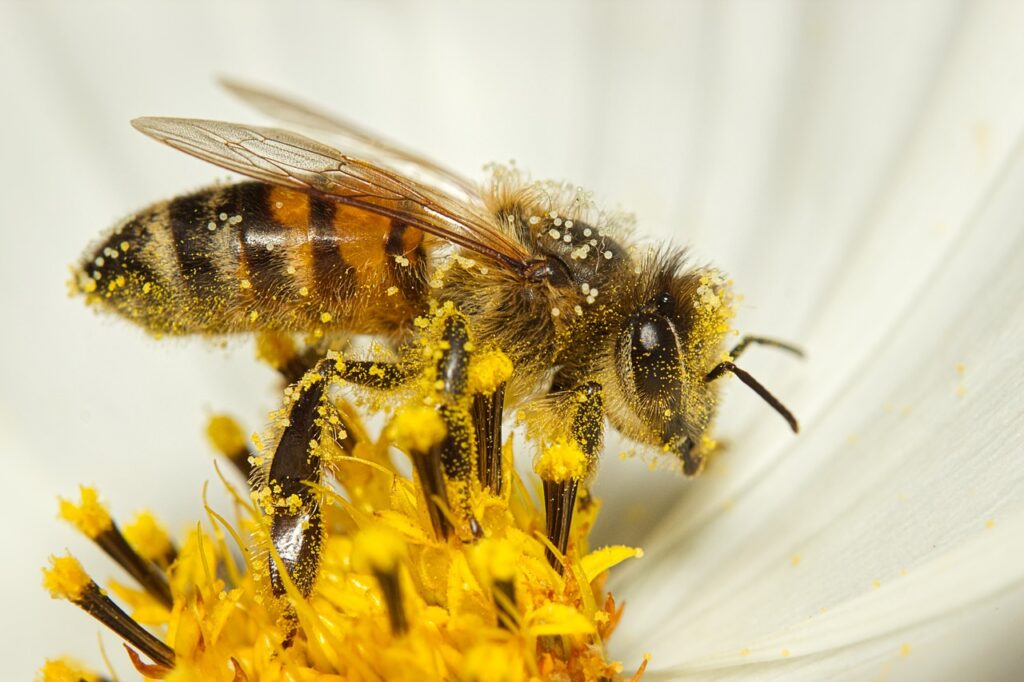
Earlier versions of this article treated “mixed pollen is best” as a direct result of the study. The actual experiment compared six single-pollen diets with a pollen-free control. The value of mixed pollen comes from background literature, not from a mixed-versus-monodiet treatment in this experiment.
The study also measured caged-worker physiology rather than colony survival, brood production or overwintering. Its main contribution is showing that pollen identity can materially change worker metabolic state.
For related context, see Low Sodium in Host Plants Increased Cannibalism in Butterfly Larvae.
For related context, see Volatiles from Damaged Camellia Leaves Reduced Herbivore Damage in Neighboring Branches.
For related context, see Genomic Prediction Can Choose Better Genotype Mixtures: Arabidopsis Pairs Reduced Herbivory by 18–30%.
Reference
- Bryś MS, Staniec B, Strachecka A. The effect of pollen monodiets on fat body morphology parameters and energy substrate levels in the fat body and hemolymph of Apis mellifera L. workers. Scientific Reports. 2024;14:15177. https://doi.org/10.1038/s41598-024-64598-0


Comments