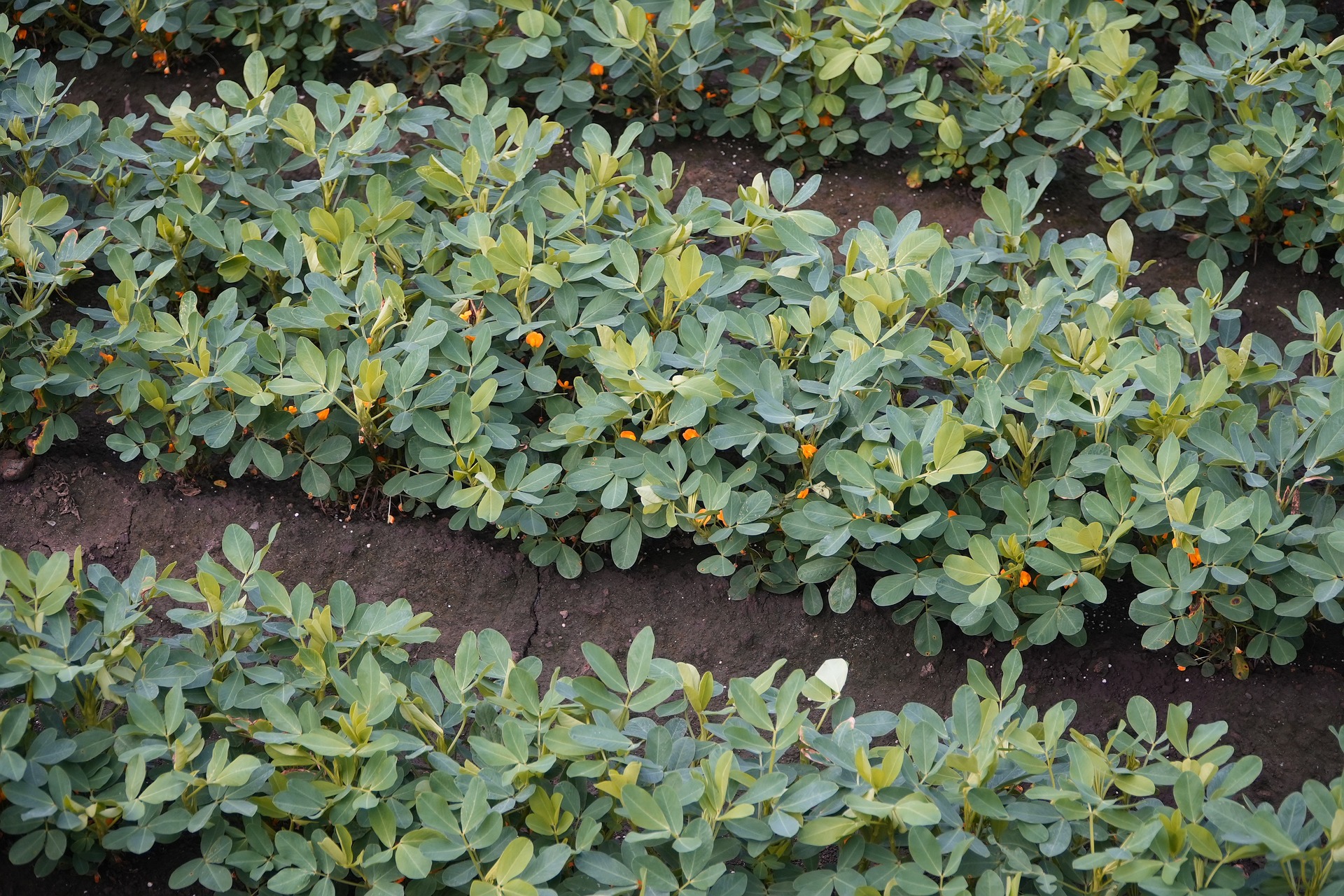
A 2024 Nature Communications study examined why a rapeseed preceding crop and maize intercropping improve peanut performance. The work links crop diversification to rhizodeposition, microbiome structure and both symbiotic and free-living nitrogen fixation.
Rapeseed preceding crop plus maize neighbor improved peanut performance

Compared with continuous peanut, rapeseed as a preceding crop improved peanut growth and nodulation; maize intercropping strengthened the effect. Isotope and microbial assays supported increased biological nitrogen fixation.
Nod factors come from rhizobia, not the plant

Plants release flavonoids and other root metabolites that influence microbial behavior. Rhizobia then produce Nod factors—lipo-chitooligosaccharide signals—after activation of nod genes. Earlier versions of this article incorrectly described Nod factors as compounds released by plant roots.
The study shows that crop combinations reshape rhizodeposited metabolites, which in turn alter nitrogen-fixing taxa and functions, including free-living diazotrophs as well as symbiotic rhizobia.
The result is specific to the tested peanut–rapeseed–maize system; other crop combinations require their own field validation.
A 2024 Publisher Correction added a missing author affiliation only and did not change the scientific results.
For related context, see Bacteria Make the Plant Hormone IAA Too: Auxin as a Plant–Microbe Communication Signal.
For related context, see How Many Plant Hormones Are in Compost? LC–MS Found Up to 35 Compounds Across Six Materials.
For related context, see Genomic Prediction Can Choose Better Genotype Mixtures: Arabidopsis Pairs Reduced Herbivory by 18–30%.
Reference
- Qiao M et al. Legume rhizodeposition promotes nitrogen fixation by soil microbiota under crop diversification. Nature Communications. 2024;15:2924. https://doi.org/10.1038/s41467-024-47159-x

Comments