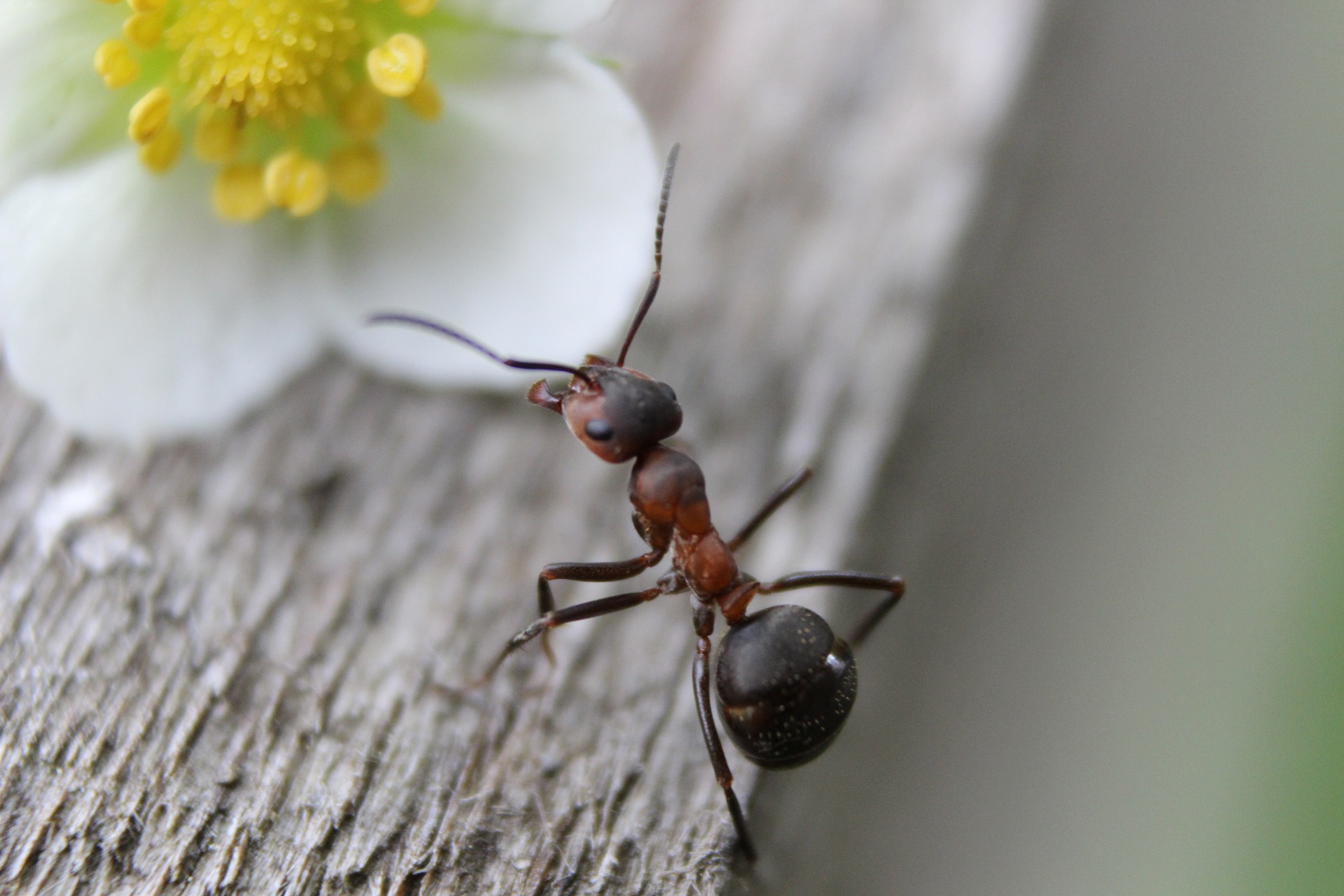
Azteca ants live inside cavities provided by Cecropia trees and form dark microbial patches containing bacteria, fungi and nematodes. A 2023 Communications Biology study used 16S rRNA amplicon sequencing to ask how patch bacterial communities change as ant colonies develop.
Early colonies had lower bacterial diversity

Early colony patches showed low alpha diversity and lacked clear ant-species-specific community structure. Established colonies, by contrast, contained more diverse and relatively ant-species-specific bacterial communities, with Burkholderiales, Rhizobiales and Chitinophagales among dominant groups.
This corrects a common misreading: the study did not find highly diverse early communities that later became simplified. The direction was the opposite.
Function remains largely hypothetical
Patch microbes have been proposed to support nutrition or pathogen defense, but this study primarily characterized community composition. It did not prove that a particular bacterium causes colony development, nor did it directly demonstrate ant–microbe coevolution.
The key result is ecological: as a social-insect colony matures, the microbial ecosystem inside its plant-provided nest also becomes more structured.
For related context, see Crop Diversification Reshapes Peanut Root Exudates and Soil Microbes to Increase Nitrogen Fixation.
For related context, see Pseudomonas Rescues a Stressed Cyanobacterium in an Engineered Sucrose-Sharing Co-Culture.
For related context, see Why Are So Many Yakushima Alpine Plants Dwarf? Deer Grazing Explains Assemblage-Level Evolution.
For related context, see Why Do Fairy Rings Form Rings? A Process-Based Model of Fungi–Plant Interactions.
Reference
- Nepel M et al. Bacterial diversity in arboreal ant nesting spaces is linked to colony developmental stage. Communications Biology. 2023;6:1217. https://doi.org/10.1038/s42003-023-05577-5

Comments