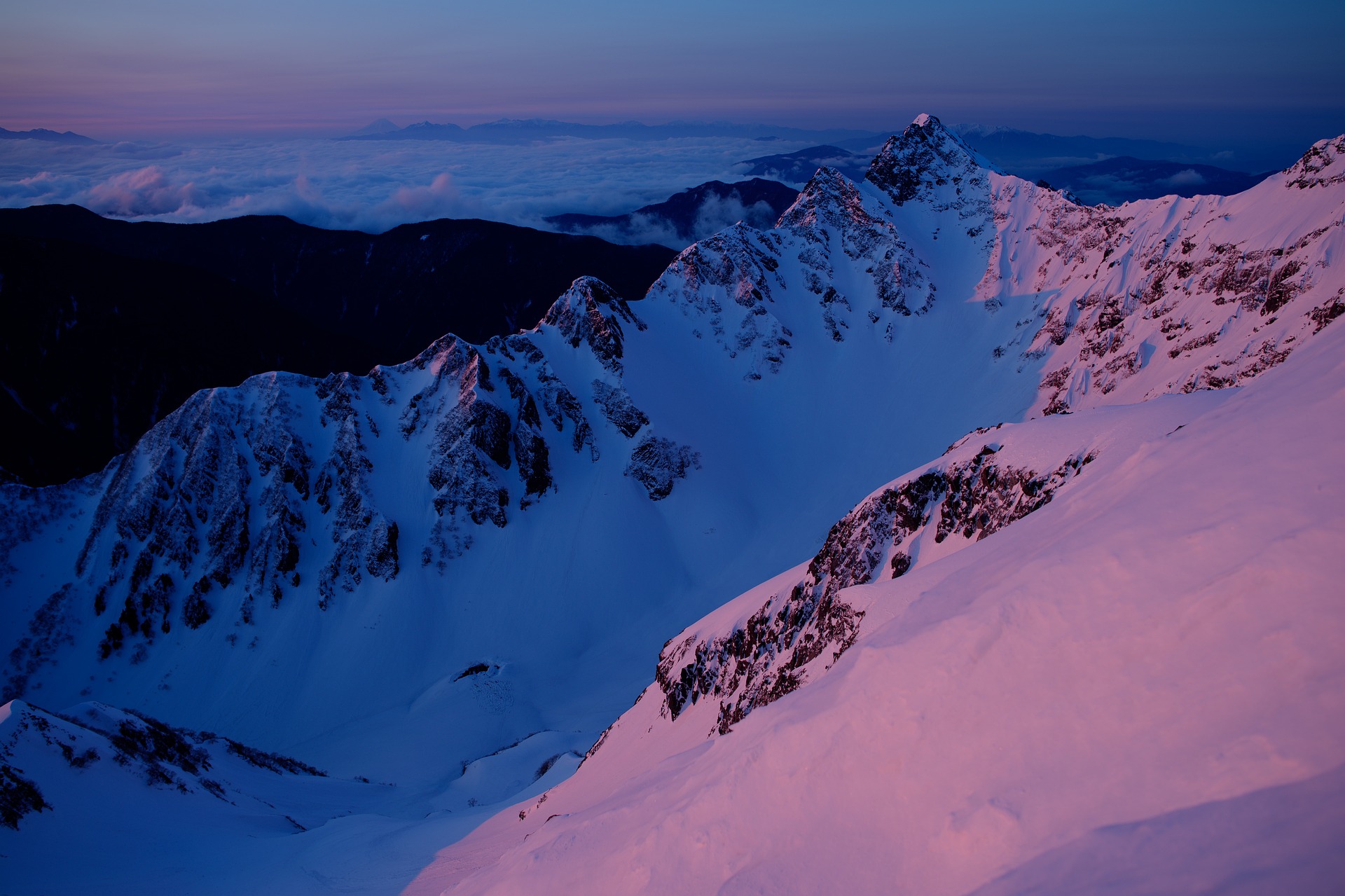
Red snow in mountains and polar regions is often produced by red cysts of the green alga Sanguina nivaloides. Because the species is not routinely cultivable, a 2023 Nature Communications study analyzed environmental cysts directly using X-ray tomography, focused-ion-beam SEM and physiological measurements.
The snow-dwelling stage is a red cyst

Cysts occupied liquid water at ice boundaries, remained photosynthetically active and survived for months, but were sensitive to freezing itself. The strategy therefore appears to involve exploiting unfrozen microsites rather than simply tolerating intracellular freezing.
A wrinkled plasma membrane expands the environmental interface

3D imaging revealed a strongly wrinkled plasma membrane. Ionomic results supported K+ efflux and phosphorus assimilation, while glycerolipid data were consistent with phosphate limitation.
Chloroplast organization supports photosynthesis in a complex light environment
Thylakoids were oriented in multiple directions. Carbon fixation occurred around a central pyrenoid, while starch accumulated in peripheral chloroplast protrusions and acted as a short-term carbon store.
Carotenoid-rich lipid droplets provide longer-term storage and protection
Cytosolic lipid droplets contained triacylglycerol and carotenoids, consistent with longer-term carbon storage and protection from oxidative stress. The red color is therefore part of a broader stress-adapted cell state.
Cryosphere-algae research has continued to expand through single-cell ionomics and metaproteomics, but traits measured in S. nivaloides should not automatically be generalized to every snow or glacier alga.
For related context, see Pseudomonas Rescues a Stressed Cyanobacterium in an Engineered Sucrose-Sharing Co-Culture.
For related context, see Moss Photosynthesis Increased at 6–10G: IBSH1/AP2-ERF Links Hypergravity to CO₂ Diffusion.
For related context, see An Insect Stuck to a Plant Does Not Prove Carnivory: How Saxifraga candelabrum Was Shown to Eat Prey.
For related context, see Resurrecting a Baltic Diatom Reveals 60 Years of Warming Adaptation: Skeletonema marinoi Shifted Its Temperature Optimum by ~1°C.
Reference
- Ezzedine JA et al. Adaptive traits of cysts of the snow alga Sanguina nivaloides unveiled by 3D subcellular imaging. Nature Communications. 2023;14:7500. https://doi.org/10.1038/s41467-023-43030-7
Comments