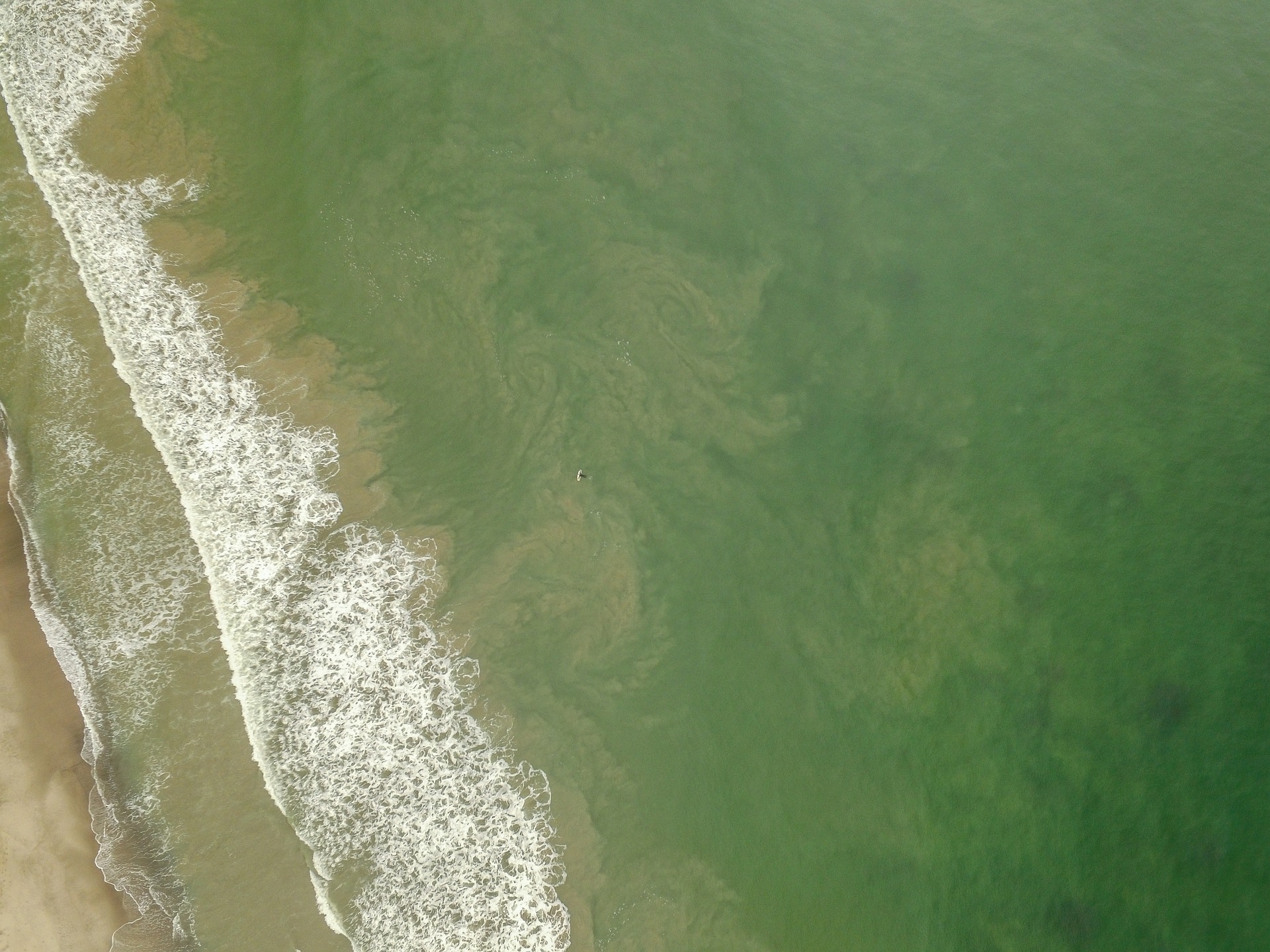
Marine sediments can preserve resting cells of phytoplankton for decades. When those cells can be revived, researchers can grow past and modern populations under the same laboratory conditions—a form of resurrection ecology.
A 2024 Nature Climate Change study resurrected the diatom Skeletonema marinoi from Baltic Sea sediment layers representing the 1960s, 1990s and 2010s. Modern strains had an optimum growth temperature almost 1°C higher than strains from the 1960s.
The correct scope is important: the paper demonstrates evolutionary change in one natural S. marinoi population in the northern Baltic Sea, not universal warming adaptation across all phytoplankton.
Resting cells from three historical periods were revived
The Archipelago Sea study site has long periods of hypoxia or anoxia at the seafloor, producing laminated sediment that preserves chronological layers. In 2020, researchers cultured sediment from layers dated to the 1960s, 1990s and 2010s and isolated S. marinoi strains.
Seven strains from each period were grown across temperatures from 6 to 26°C to estimate thermal performance curves.
The optimum rose from 14.99°C to 15.88°C

Mean optimum growth temperature (Topt) increased from 14.99°C in the 1960s strains to 15.5°C in the 1990s and 15.88°C in the modern strains. The roughly one-degree shift paralleled regional warming and was interpreted as adaptation in the natural population.
The authors also found that evolutionary change under natural warming proceeded roughly an order of magnitude more slowly than estimates from some laboratory experimental-evolution studies using stronger temperature selection.
Warmer adaptation came with reduced cold performance
The lower thermal limit (Tmin) shifted upward from 2.93°C in the 1960s strains to 4.42°C in the modern strains. Older strains grew better at low temperatures. No clear difference in the upper thermal limit (Tmax) was detected among decades.
This means adaptation was not a simple expansion of tolerance. It involved a trade-off: improved warm-temperature performance accompanied by loss of cold-temperature performance.
Cell morphology and gene expression changed too
Modern strains showed a distinctive temperature-dependent shift in cell width and surface-to-volume ratio. Gene-expression differences included nitrate metabolism and heat-stress pathways. Older strains showed stronger heat-shock responses at high temperature, consistent with modern strains experiencing the same heat as less stressful.
Multiple lines of physiology, morphology and transcriptomics therefore point in the same direction.
This does not mean all phytoplankton will evolve fast enough
S. marinoi is especially useful for resurrection studies because it forms resting stages that survive in sediment. Phytoplankton species differ in generation time, dispersal, standing genetic diversity, nutrient physiology and ecological interactions.
The Baltic site also changed in ways other than temperature, including eutrophication. Even with a strong temperature signal, natural evolution occurs under multiple simultaneous pressures.
The main lesson is therefore narrower and more useful: measurable evolutionary adaptation to warming occurred within decades in this natural diatom population, but it came with trade-offs and does not guarantee that every phytoplankton species can keep pace with climate change.
For related context, see Inside the Red-Snow Alga Sanguina nivaloides: 3D Imaging of a Non-Cultivable Snow-Algal Cyst.
For related context, see Pseudomonas Rescues a Stressed Cyanobacterium in an Engineered Sucrose-Sharing Co-Culture.
For related context, see How Much Crop Choice Could Low Latitudes Lose? Climatic Niches of 30 Food Crops Under 1.5–4°C Warming.
Reference
- Hinners J et al. Temperature optima of a natural diatom population increases as global warming proceeds. Nature Climate Change. 2024;14:518–525. https://doi.org/10.1038/s41558-024-01981-9

Comments