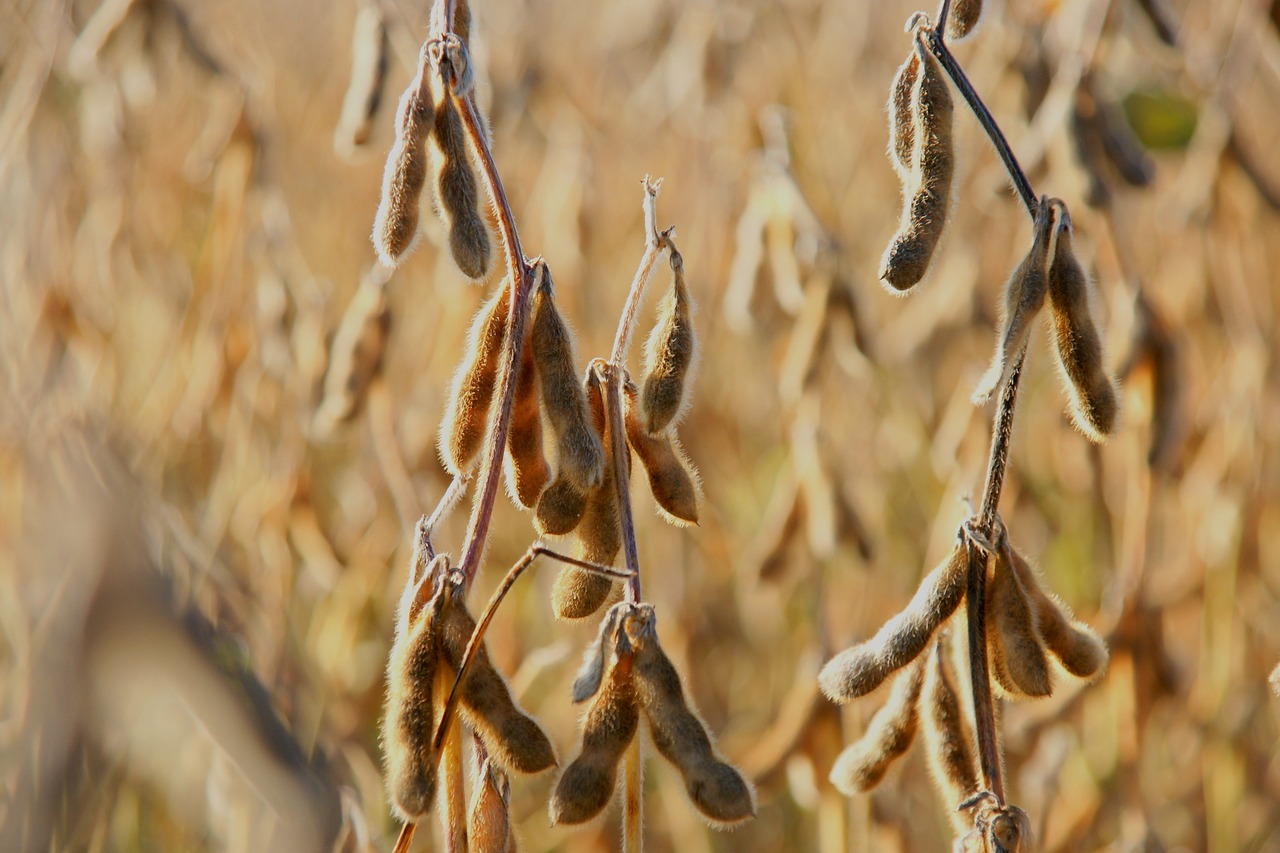
Pod shattering helps wild soybean disperse seed but causes harvest loss in agriculture. A 2024 Nature Communications study showed that cultivated-soybean shattering resistance largely arose through artificial selection of natural coding mutations in two nearby genes, Sh1 and Pdh1.
This was a domestication-genetics study, not simply a new transgenic double mutant
The researchers integrated biparental QTL mapping, GWAS and allele distributions across soybean germplasm to reconstruct how natural variants were selected during domestication.
Sh1 controls secondary-wall formation in the abscission layer

Sh1 encodes a C2H2-like zinc-finger transcription factor that represses SHAT1-5. In shattering wild soybeans, this reduces secondary-wall thickness in fiber-cap cells of the pod-suture abscission layer. Loss-of-function sh1 alleles therefore strengthen the relevant cell walls and reduce shattering.
Pdh1 generates torsional force in the pod wall
Pdh1 encodes a dirigent protein that organizes asymmetric lignin distribution in the inner sclerenchyma, generating pod-wall torsion during drying. The pdh1 resistance allele reduces that mechanical driver.
Selection of resistance mutations at both nearby genes produced strong shattering resistance in cultivated soybean.
Most elite soybean cultivars are already generally shattering resistant; the value of this study is explaining the molecular and cellular basis of a major domestication trait and providing a framework for further improvement under stressful environments.
For related context, see How Are Japanese Soybeans Genomically Different? A 462-Accession Pangenome—and Two Author Corrections.
For related context, see SW14 Rebalances Soybean Seed Weight, Protein and Oil by Disrupting a LEC1-Containing NF-Y Complex.
For related context, see Tomato MiMe Combines Four Grandparent Haplotypes into a Designed 4-Hap Tetraploid.
Reference
- Li S et al. Artificial selection of mutations in two nearby genes gave rise to shattering resistance in soybean. Nature Communications. 2024;15:7588. https://doi.org/10.1038/s41467-024-52044-8
Comments