
Damaged plants change the volatile organic compounds they release, and neighboring plants can respond by inducing or priming defense. A 2024 Scientific Reports study tested this phenomenon under field conditions in Camellia japonica and C. rusticana.
Healthy branches were exposed to air from damaged leaves
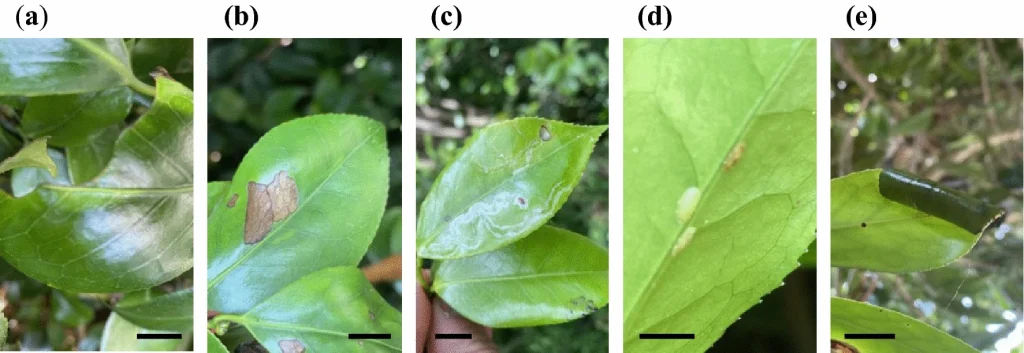
The researchers clipped leaves to generate artificially damaged plant volatiles (ADPVs), exposed branches on neighboring plants, and also transferred headspace air from damaged branches to intact branches.
Branches exposed to damage-associated volatiles later showed lower leaf damage than control branches exposed to volatiles from intact leaves. In one experiment, the reduced-damage effect was still detectable three months later.
Not every comparison was statistically significant in every year, so the effect should not be treated as perfectly uniform.
“Plants warning each other” is a metaphor
The experiments support airborne signaling, but do not imply intention or emotion. The active compounds and downstream defense genes were not identified in this study.
Agricultural use is therefore a future possibility rather than a demonstrated pesticide replacement. Field deployment would require identifying the active cues and testing dose, timing, species specificity and environmental dispersion.
For related context, see What Does Plant Resistance Mean? Maize–Mite Interactions Explain Antixenosis, Antibiosis and Tolerance.
For related context, see Pollen Species Change Honey-Bee Metabolism: Six Monodiets Altered Fat Body and Energy Reserves.
For related context, see Mustard Biofumigation Potential Varies by Cultivar: Nuttongii Reached 27.47 µmol/g AITC.
For related context, see Does Chinese Chive Smell Different by Plant Part? The Chemistry Released When You Cut It.
Reference
- Sakurai Y, Ishizaki S. Plant–plant communication in Camellia japonica and C. rusticana via volatiles. Scientific Reports. 2024;14:6284. https://doi.org/10.1038/s41598-024-56268-y


Comments