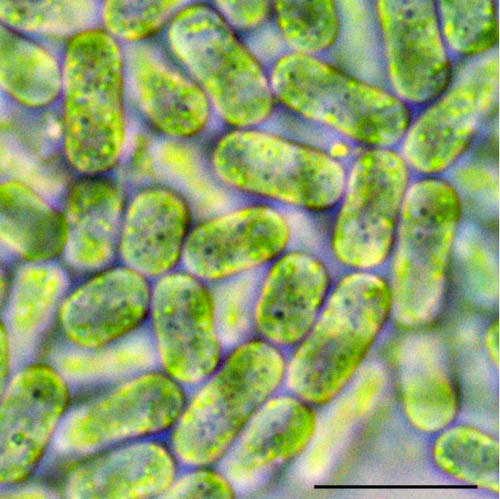
A 2024 Communications Biology study analyzed an engineered two-member consortium: sucrose-secreting Synechococcus elongatus cscB and sucrose-consuming Pseudomonas putida cscRABY.
A cyanobacterium plus a heterotrophic bacterium—not two algae
The phototroph fixes carbon and exports sucrose, while the engineered P. putida consumes that sucrose. Under high-light conditions combined with induced sucrose secretion, the cyanobacterium experienced photobleaching stress.
Adding P. putida early rescued S. elongatus, increasing cyanobacterial growth rate by up to about 80% under some conditions. Inoculation timing strongly affected the outcome. P. putida itself showed little growth penalty from co-culture.
Multi-omics explored the rescue mechanism

Transcriptomics, proteomics and metabolomics pointed to multiple interacting processes, including oxidative stress and metabolite exchange. The study does not reduce the benefit to one fully proven rescue metabolite.
This is also not evidence that generic co-culture can grow any otherwise unculturable microbe. It is a deliberately engineered synthetic consortium and a useful model for industrial phototroph–heterotroph design.
For related context, see Bonito Stock Plus Intense Red Light Turns Euglena Red—Through Chloroplast Loss and Carotenoid Persistence.
For related context, see Bacteria Make the Plant Hormone IAA Too: Auxin as a Plant–Microbe Communication Signal.
For related context, see Inside the Red-Snow Alga Sanguina nivaloides: 3D Imaging of a Non-Cultivable Snow-Algal Cyst.
Reference
- Kratzl F et al. Pseudomonas putida as saviour for troubled Synechococcus elongatus in a synthetic co-culture – interaction studies based on a multi-OMICs approach. Communications Biology. 2024;7:452. https://doi.org/10.1038/s42003-024-06098-5


Comments