A 2024 Plants study found that Euglena gracilis becomes reddish-orange when cultured in bonito-stock medium under intense red light. Spectroscopy and HPLC were used to investigate the phenotype.
The treatment was extremely bright red light
Red-light wavelengths of 605–660 nm were delivered at 1,000–1,300 µmol photons/m²/s. Under normal white light (~90 µmol photons/m²/s), bonito-stock medium supported strong growth but did not cause the same reddening.
Red color partly reflects chloroplast destruction
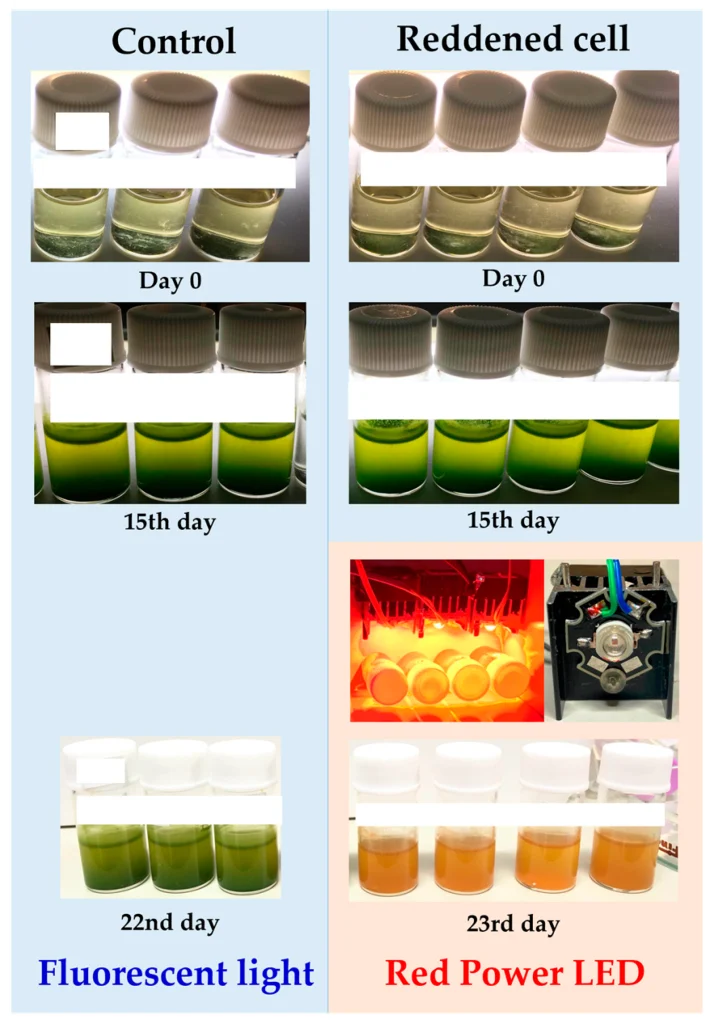
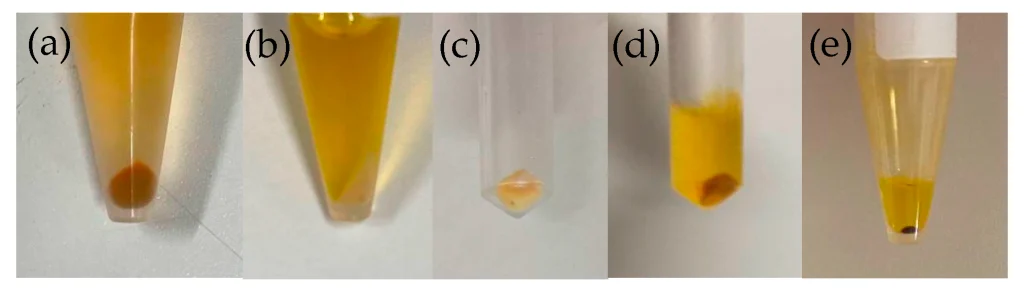
Under intense red light, excessive photosynthetic activity damaged many chloroplasts, reducing green chlorophyll while carotenoids remained. The major carotenoid detected in reddened cells was diadinoxanthin.
An additional unidentified xanthophyll not observed under normal culture conditions was also detected and was suggested to contain a C=O bond. Earlier versions of this article incorrectly described diadinoxanthin itself as a completely new Euglena product.
Total carotenoid increase was not demonstrated
The authors explicitly note that the study did not verify an increase in total carotenoid content. Therefore, red color does not by itself establish improved nutritional value or a new health benefit.
The non-GM cultivation method is industrially interesting, but food functionality, safety, process control and regulatory requirements still need separate validation.
For related context, see Pseudomonas Rescues a Stressed Cyanobacterium in an Engineered Sucrose-Sharing Co-Culture.
For related context, see Engineering Koji Mold for Meat Alternatives: More Heme and Ergothioneine in Aspergillus oryzae.
For related context, see Inside the Red-Snow Alga Sanguina nivaloides: 3D Imaging of a Non-Cultivable Snow-Algal Cyst.
Reference
- Yamashita K et al. Reddening of the Unicellular Green Alga Euglena gracilis by Dried Bonito Stock and Intense Red Light Irradiation. Plants. 2024;13:510. https://doi.org/10.3390/plants13040510
Comments