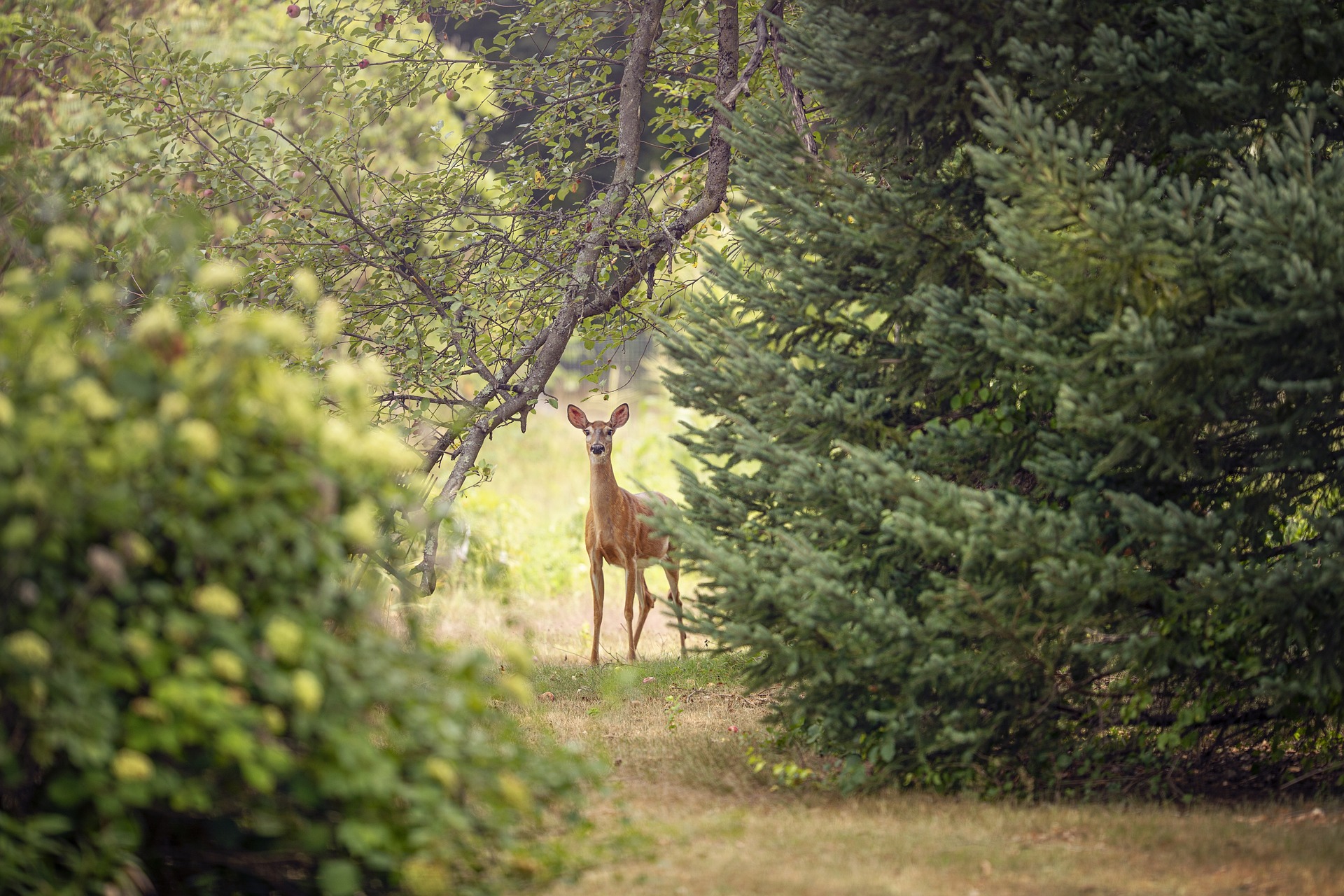
Yakushima Island supports more than 80 unusually dwarf alpine plant taxa. A 2024 Journal of Ecology study compared 40 Yakushima taxa with related or comparable counterparts to test whether long-term sika-deer grazing helps explain this assemblage-level convergence.
Deer preference consistently explained plant size

Models incorporated climate, a soil-nutrient proxy, phylogenetic relationships and deer preference. Deer preference remained a strong predictor of size reduction: palatable taxa showed stronger dwarfism, while unpalatable taxa showed less.
This is evolutionary dwarfism, not temporary grazing damage

The study does not simply measure plants after being eaten. Genetic analyses and comparative patterns support long-term local adaptation, with some dwarf lineages potentially diverging over tens of thousands of years. Smaller stature may reduce accessibility to deer and reduce biomass loss when grazed.
Yakushima’s cold, wet and nutrient-poor alpine environment still matters; the analysis shows that grazing explains additional variation after those abiotic factors are considered.
The result therefore demonstrates that a herbivore can help drive convergent functional evolution across an entire plant assemblage.
For related context, see Low Sodium in Host Plants Increased Cannibalism in Butterfly Larvae.
For related context, see Pollen Species Change Honey-Bee Metabolism: Six Monodiets Altered Fat Body and Energy Reserves.
For related context, see What Does Plant Resistance Mean? Maize–Mite Interactions Explain Antixenosis, Antibiosis and Tolerance.
Reference
- Takahashi D. Deer grazing drove an assemblage-level evolution of plant dwarfism in an insular system. Journal of Ecology. 2024. https://doi.org/10.1111/1365-2745.14309


Comments