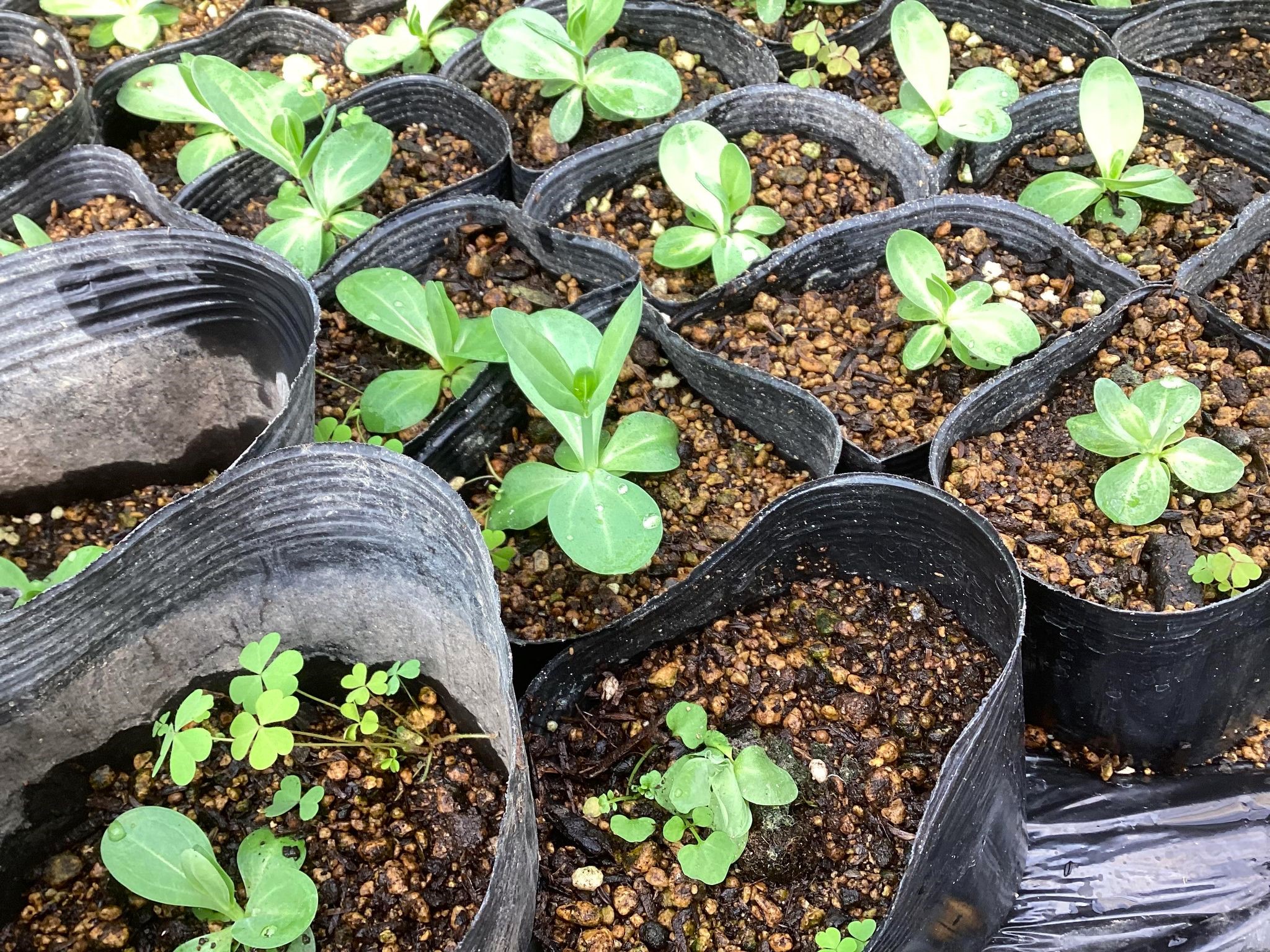
This page is an archived cultivation record from a small Eustoma (Eustoma grandiflorum) trial started in September 2023. The older version also contained a planned 2024 sales notice; that information is historical and does not indicate current availability.
The surviving record ends on November 3, 2023. Flowering, shipment and sales outcomes are not documented here, so they should not be reconstructed from assumption.
Cultivars in the trial
The trial used Fukukaen cultivars Citrus Mousse and Sakura Charme. The practical aim was to follow early growth after potting and assess whether the plants could eventually be developed for potted or cut-flower use.
September 15, 2023: seedlings arrived and were potted
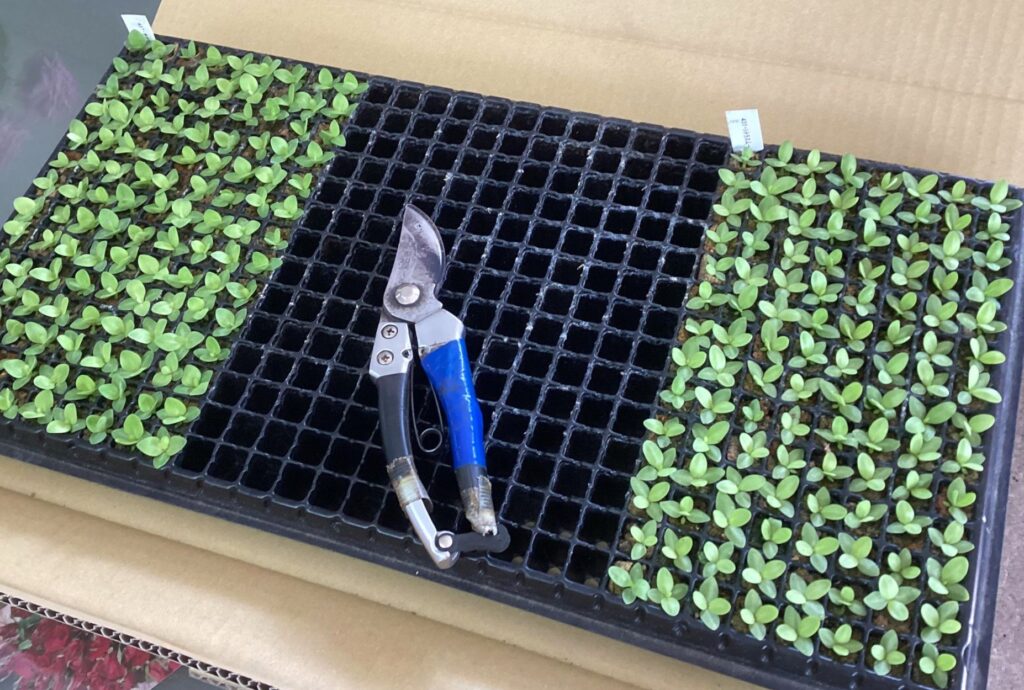
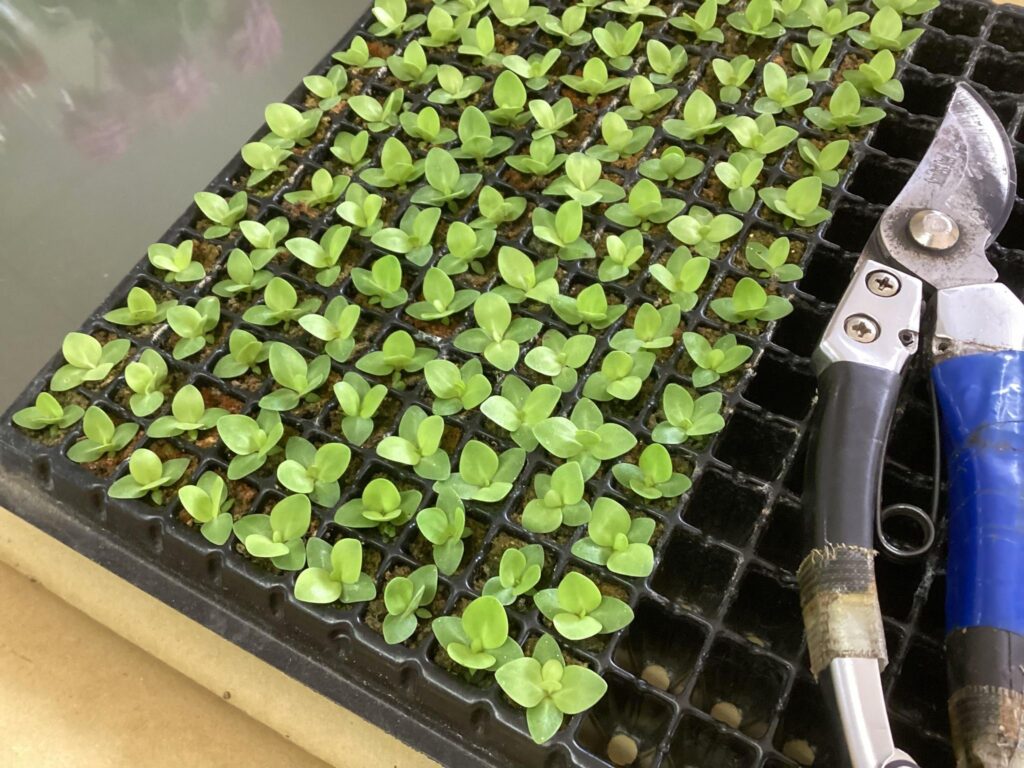
The seedlings arrived in September and were transplanted into pots. At this stage the plants were still small, with the compact leafy form typical of young Eustoma.
November 3, 2023: about 2.5 months after potting
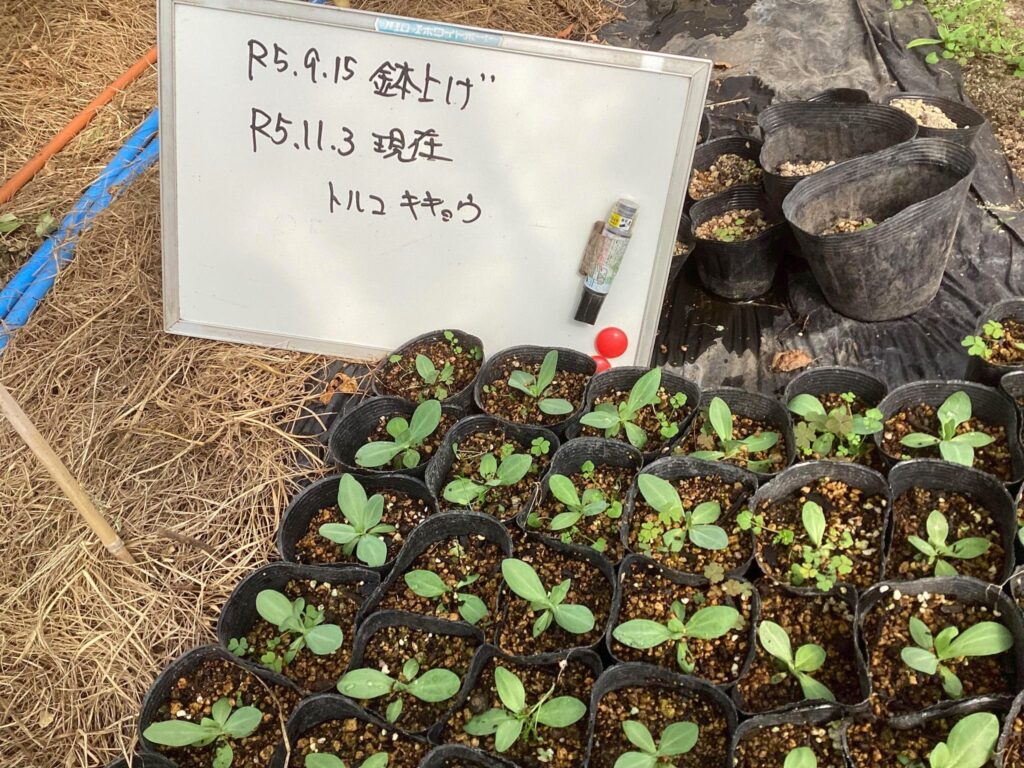
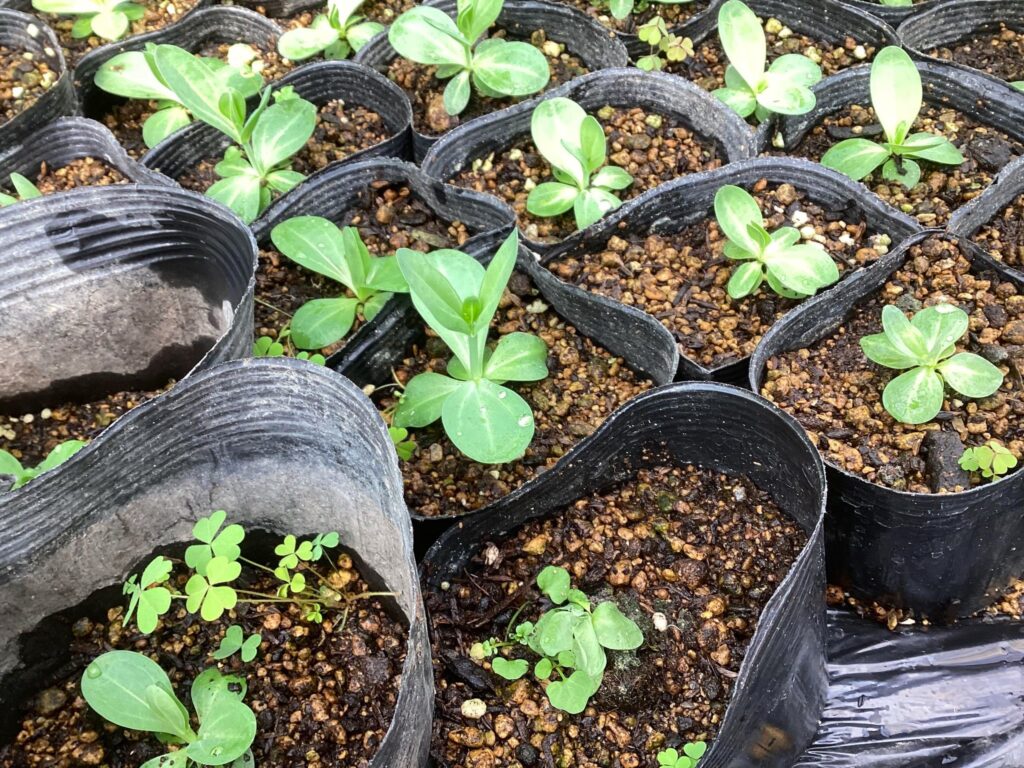
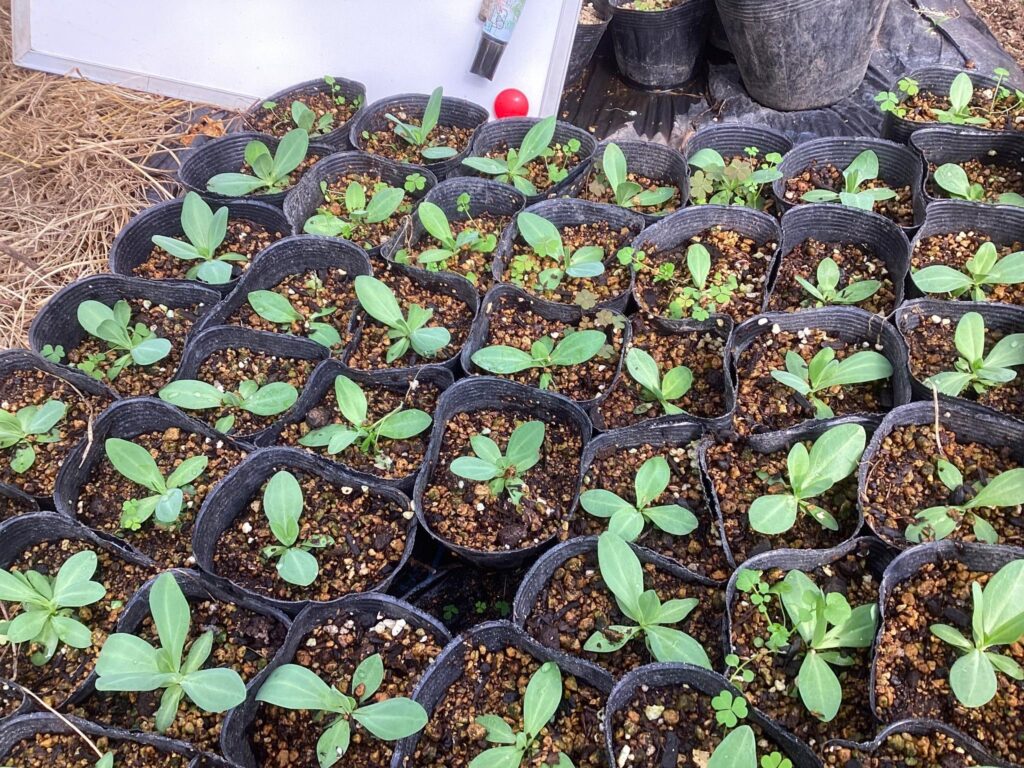
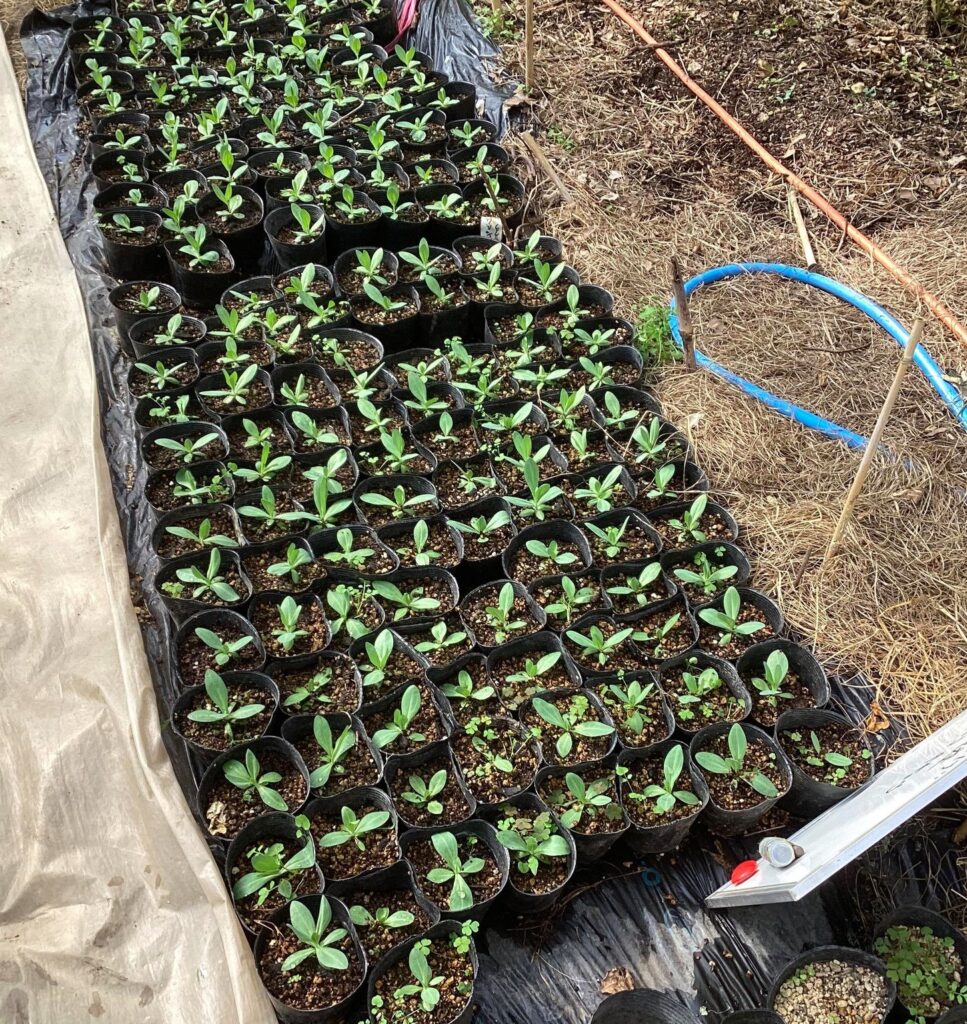
By early November the plants had visibly increased in leaf number and canopy size. The original note estimated roughly two- to three-fold visual growth, but no quantitative measurements were taken, so this remains an observational record rather than a measured growth rate.
The roots appeared established and the shoots showed no obvious severe wilting or chlorosis in the photographs.
What this archive can and cannot show
This page documents seedling arrival, potting and early vegetative growth from September to November 2023. It does not provide verified final flowering rate, cut-flower quality, shipment numbers or 2024 sales results.
For future cultivation logs, measurements such as plant height, leaf number, bolting date, flowering date and quality scores would make comparisons much more useful.
The value of this page is therefore not as a current sales page, but as a visual record of Eustoma establishment and early growth.
For related context, see How miR159 and CKX6 Control Rose Petal Size Through Cytokinin Turnover.
For related context, see Plant 'Thorns' Are Not All the Same: LOG Genes Repeatedly Shaped Prickle Evolution Across 150 Million Years.
For related context, see Purple Woodsorrel Petal Patterns Under the Microscope: Dark Veins Are Built from Differently Pigmented Cells.

Comments